Dublin vs Amsterdam for a Polymarket Bot: We Measured Both
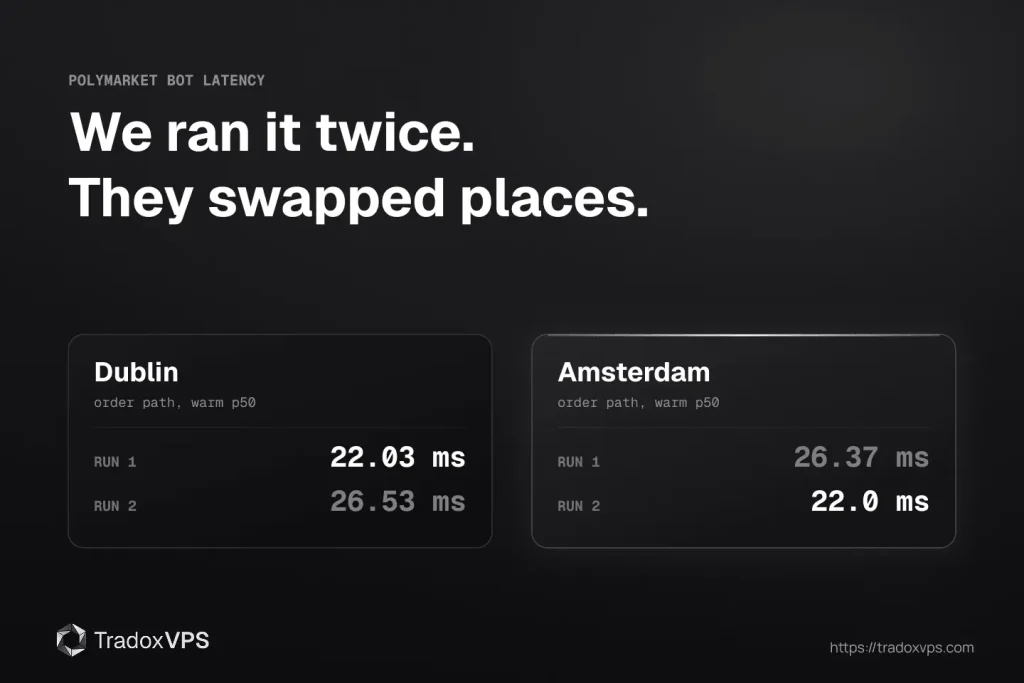
Two of our boxes, one Dublin and one Amsterdam, probed against live Polymarket endpoints in the same window. The order path was a coin flip across two runs. The live feed was not, and neither was the settlement path. Here is what we measured and how to pick.
Polymarket Crypto Trading: The Honest Infrastructure Guide
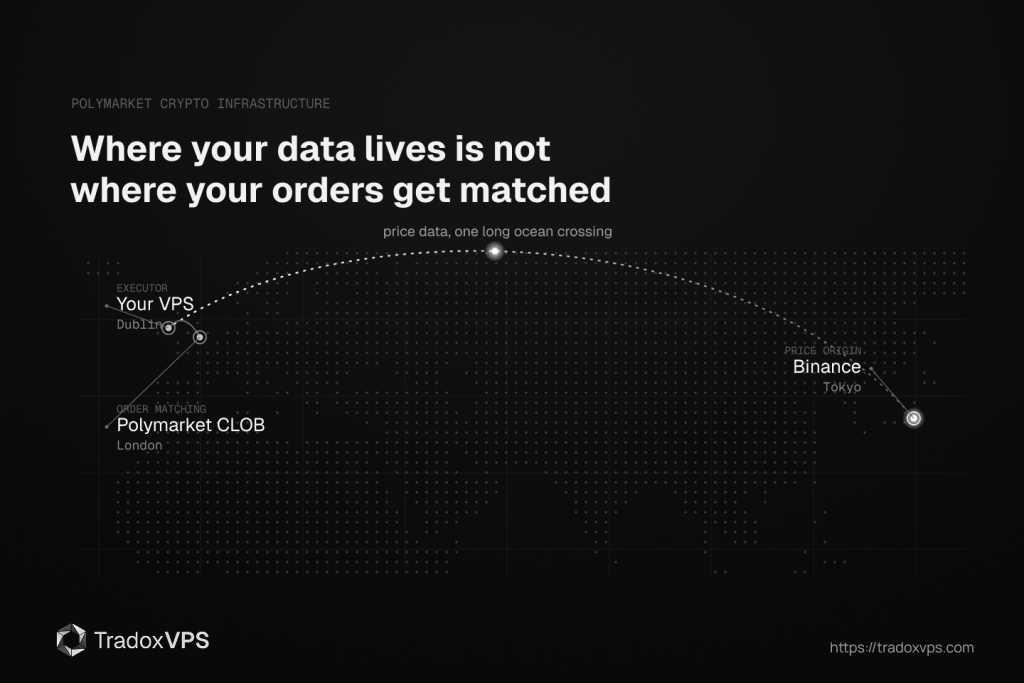
Most polymarket crypto trading guides get the basics wrong. The order engine lives in London (not Dublin), Binance still drives the price your market resolves on, and a Tokyo collector buys less than you think. Here’s the honest infrastructure map.
Polymarket Copy Trading: The Math That Decides Whether Following a Wallet Pays
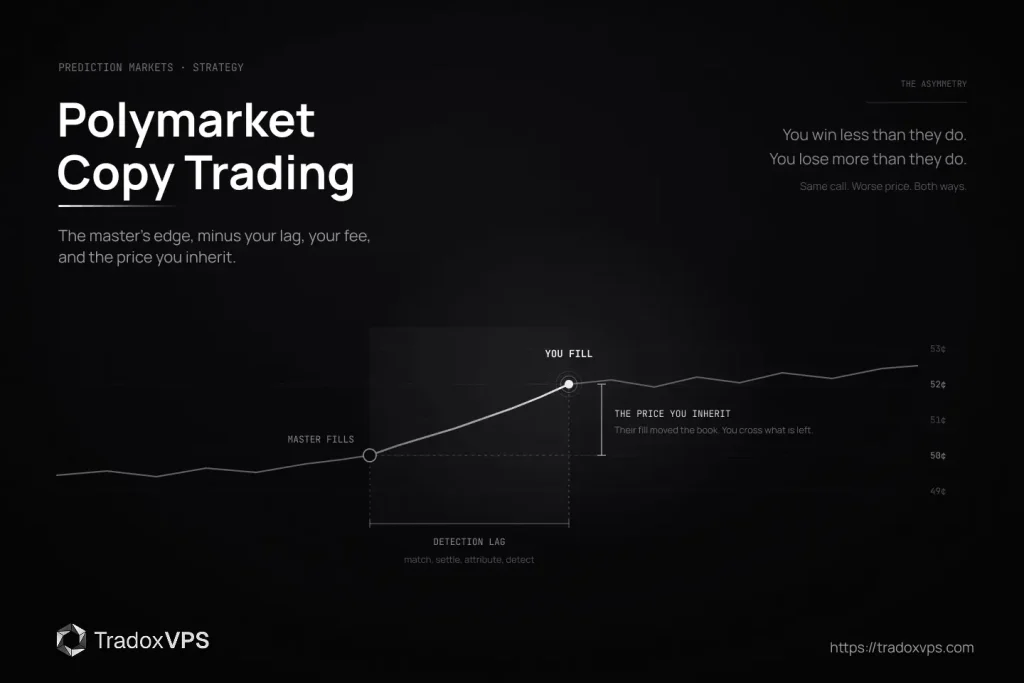
Copy trading on Polymarket transfers a trader’s decisions to you, minus detection lag, fees, and worse fills. Here is the equation that decides whether a wallet is worth copying, and the vetting process that protects you when it is not.
Polymarket API for Trading Bots: Rate Limits and WebSocket Behavior That Hold Up in Production
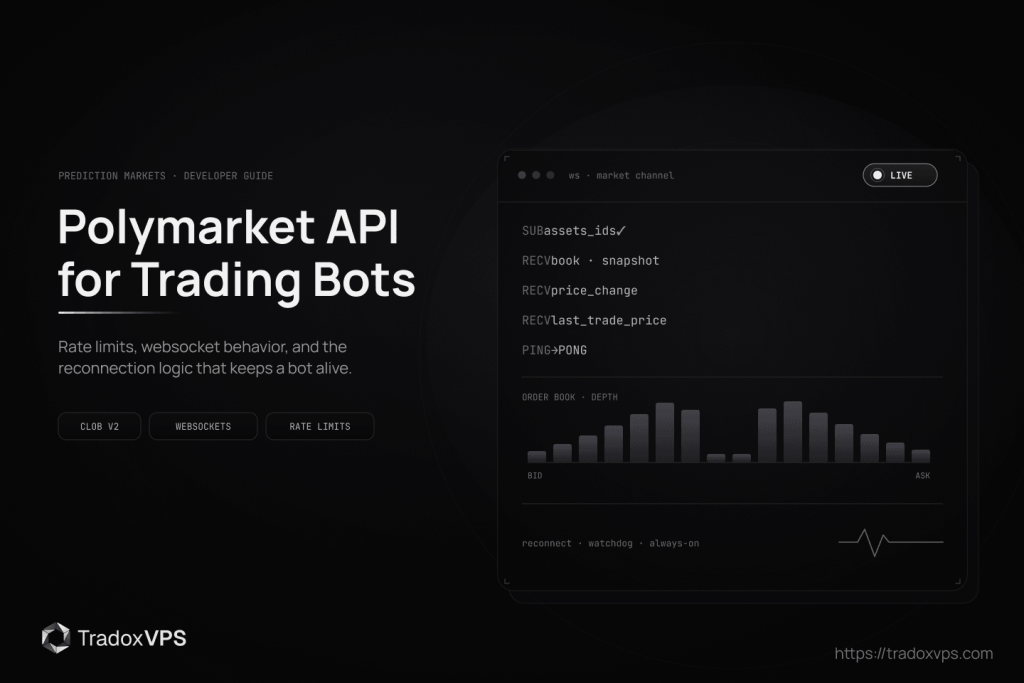
A practical guide to building bots on the Polymarket API: which of the two platforms applies to you, the real CLOB rate limits, how the websocket channels and heartbeats work, and the reconnection logic that keeps a bot running when the connection drops.
TradoxVPS vs AWS for Polymarket Trading: The Five Questions That Actually Decide It
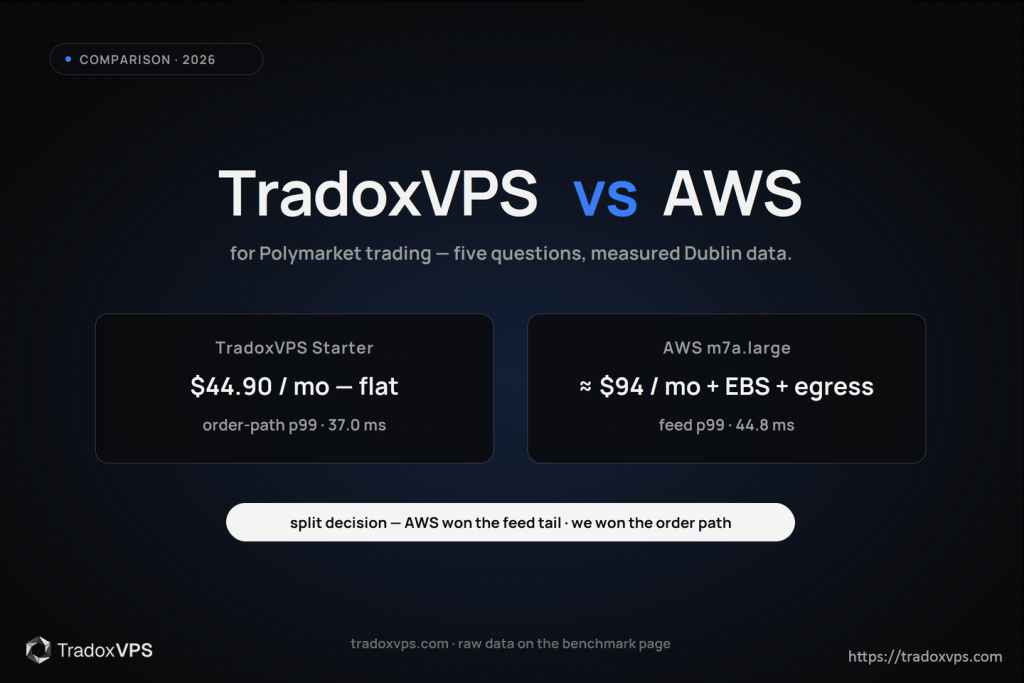
We run TradoxVPS — and we still benchmarked our $44.90 Dublin box against an AWS m7a.large with the same public probe. AWS won the feed tail; we won the order path. Here are the five questions that actually decide which one your Polymarket bot needs.
Best Polymarket VPS in 2026: We Bought 4 Servers and Benchmarked in Dublin
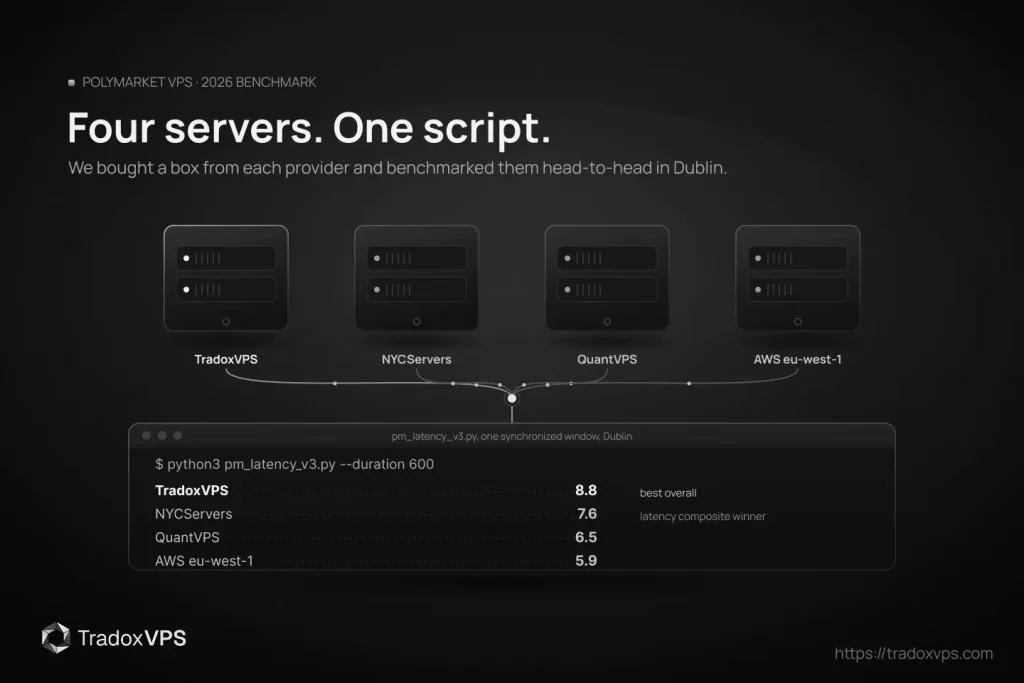
Benchmarked June 4, 2026 — one synchronized evening window, four providers, every raw file downloadable below. Next scheduled re-run: within the quarter, published with dates. Disclosure, before anything else: we operate TradoxVPS, one of the four providers tested. That is exactly why this article contains no adjectives where a number will do — and why it’s […]
How to Test Polymarket VPS Latency
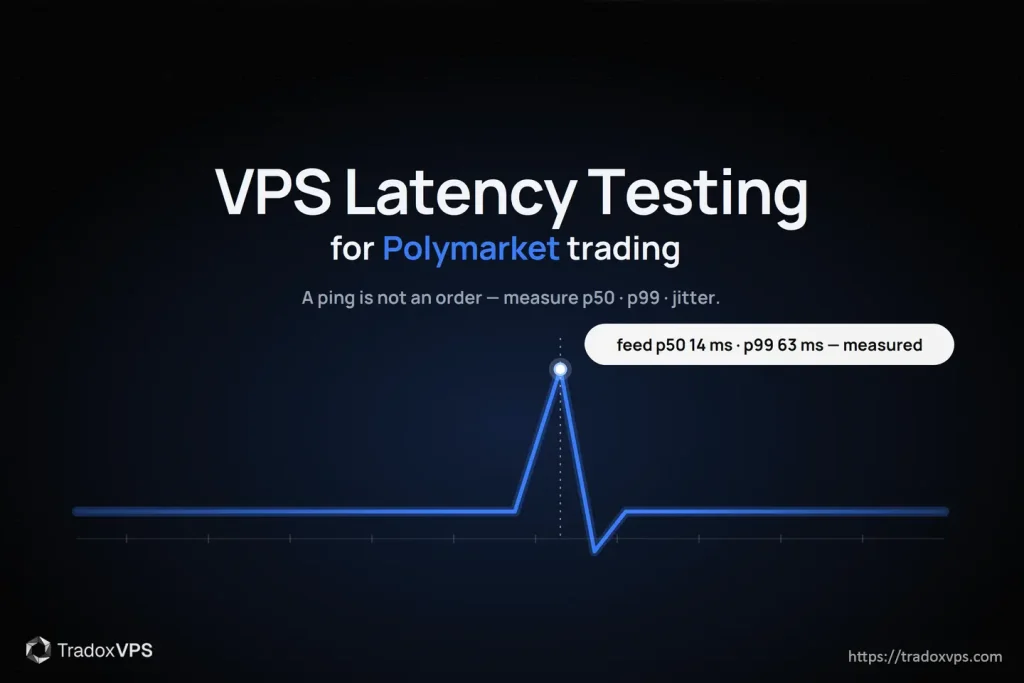
Most Polymarket latency tests measure the wrong thing. Here is the method that measures what actually decides your fills, the script to run it, and two locations of real results, including the run where the winner changed.
Prediction Market Arbitrage: How to Trade Cross-Platform Gaps in 2026
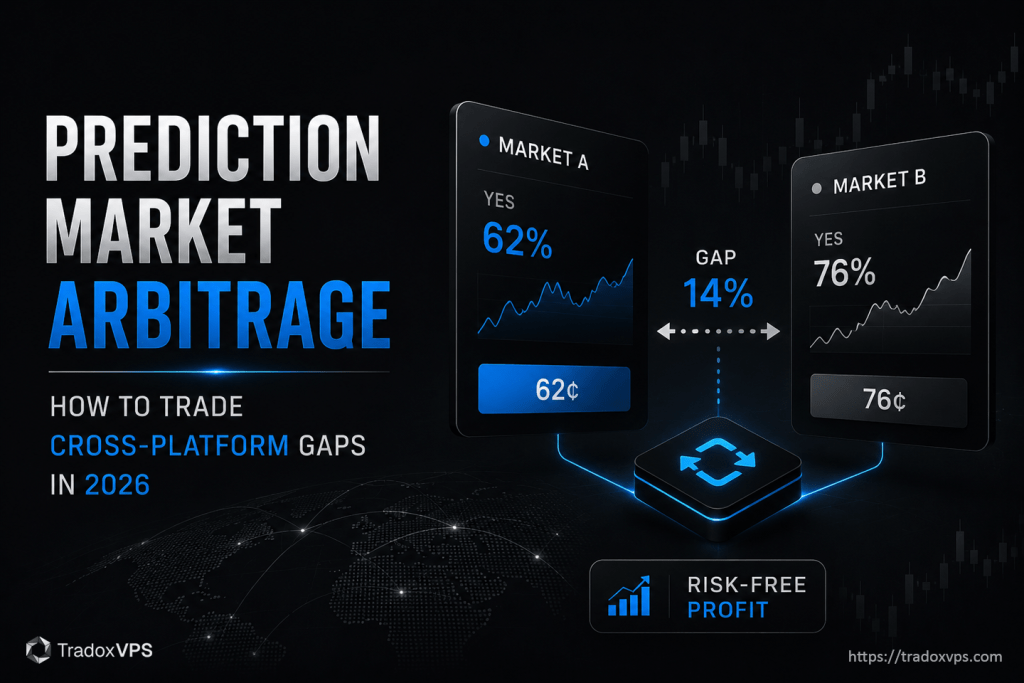
Prediction markets don’t price the same event the same way. Here’s how traders exploit those gaps – and why execution speed is the only moat that matters.
How to Win on Polymarket in 2026: The Strategic Edge Guide
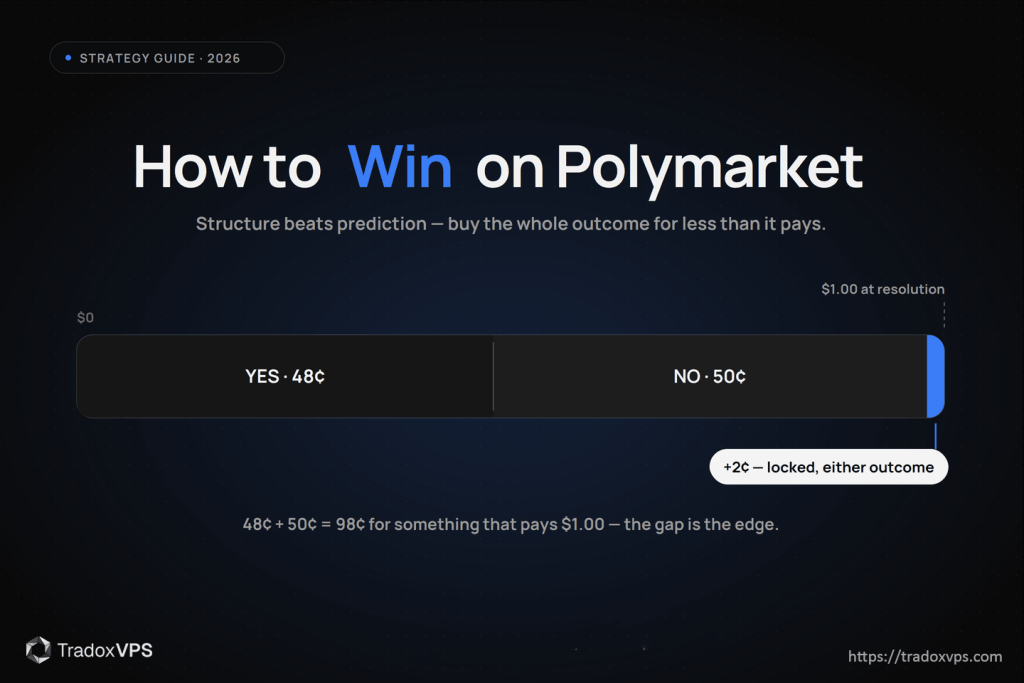
In 2025, four researchers did something nobody selling a Polymarket course has done: they analyzed a full year of on-chain Polymarket order data and measured who was actually making money, and how. The study — Unravelling the Probabilistic Forest: Arbitrage in Prediction Markets — estimated roughly $40 million in realized arbitrage profit extracted during the measurement window. Not lucky calls on elections: systematic exploitation of pricing structure, by participants who treat Polymarket as a market rather than a sportsbook.
That’s the honest frame for “winning” here. The edge that persists isn’t predicting the news better than everyone — it’s understanding structure: how prices must relate to each other, where the platform pays you to participate, what fees and execution actually cost, and where your specific knowledge beats the crowd’s. This guide covers each, with the receipts, the math, and the risks the hype versions leave out.
What Polymarket is, mechanically
Polymarket is a peer-to-peer central limit order book on Polygon. Shares in an outcome trade between $0.00 and $1.00, the price doubling as the market’s implied probability; winners settle at $1.00, losers at zero. Resolution runs through UMA’s optimistic oracle rather than a central referee — which matters later, because oracle resolution has edge cases that strategy guides ignore. Since 2026 there are effectively two venues: the international book and a separate CFTC-licensed US exchange, with different fee schedules.
Prices here move on real capital, which is why they often front-run polls and headlines — and why the easy money you’ve heard about is mostly gone. What remains is below.
Strategy 1 — High-probability yield (“clear-win” markets), with the math done honestly
The setup: outcomes that are all but decided still trade at 95–98¢ while the world waits for formal resolution. Buying at 97¢ to collect $1.00 looks like a 3.1% yield, and on a market resolving in two weeks that’s substantial annualized. Two things the pitch always skips:
The blow-up math. At 97¢, you risk 97¢ to win 3¢ — one miss erases about 32 wins. “Virtually certain” markets fail in exactly the ways that don’t feel like market risk: a resolution-criteria technicality, a delayed event, an oracle dispute. So the real work isn’t finding 97¢ markets; it’s reading resolution criteria like a lawyer and skipping anything with interpretive wiggle. The win rate you need at these prices is not high — it’s nearly perfect.
The fee silver lining. Both major venues price taker fees on a curve that collapses toward zero at extreme prices (the formula is rate × P × (1−P) — full breakdown with worked examples in our arbitrage guide). Near 97¢, fees are pennies per hundred shares. The structure genuinely favors this strategy on costs; it punishes it on tail risk. Size accordingly.
5 Best Polymarket Strategies for Beginner Traders in 2026
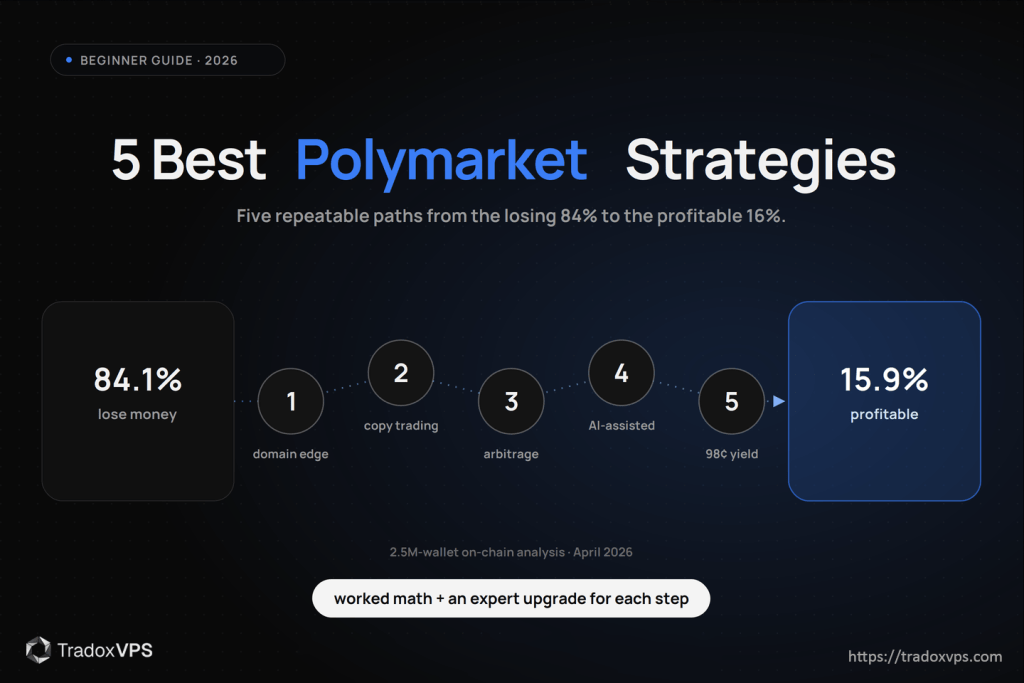
On-chain research says 84.1% of Polymarket wallets lose money — and the winners are systematic, not psychic. Five strategies that put beginners on the right side of that split, each with worked math, a beginner playbook, and an expert upgrade. No fantasy stats.