
How to Choose the Best VPS Location for Your Trading Strategy (2026)
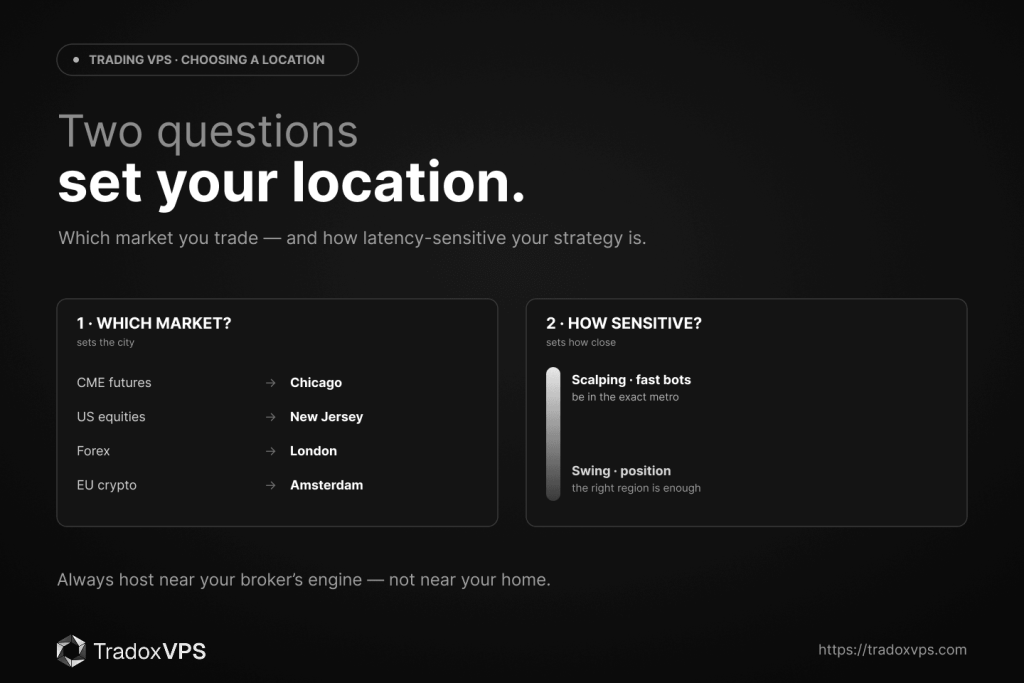
The biggest mistake traders make with VPS location is choosing it based on where they live instead of where their broker’s matching engine is. Your remote-desktop session isn’t time-sensitive, but your orders travel from the VPS to the exchange on every trade. So the choice comes down to two questions: which market you trade (which sets the city) and how latency-sensitive your strategy is (which sets how much proximity is worth paying for). Here’s how to answer both.
How to Choose the Best Trading VPS (2026 Guide)
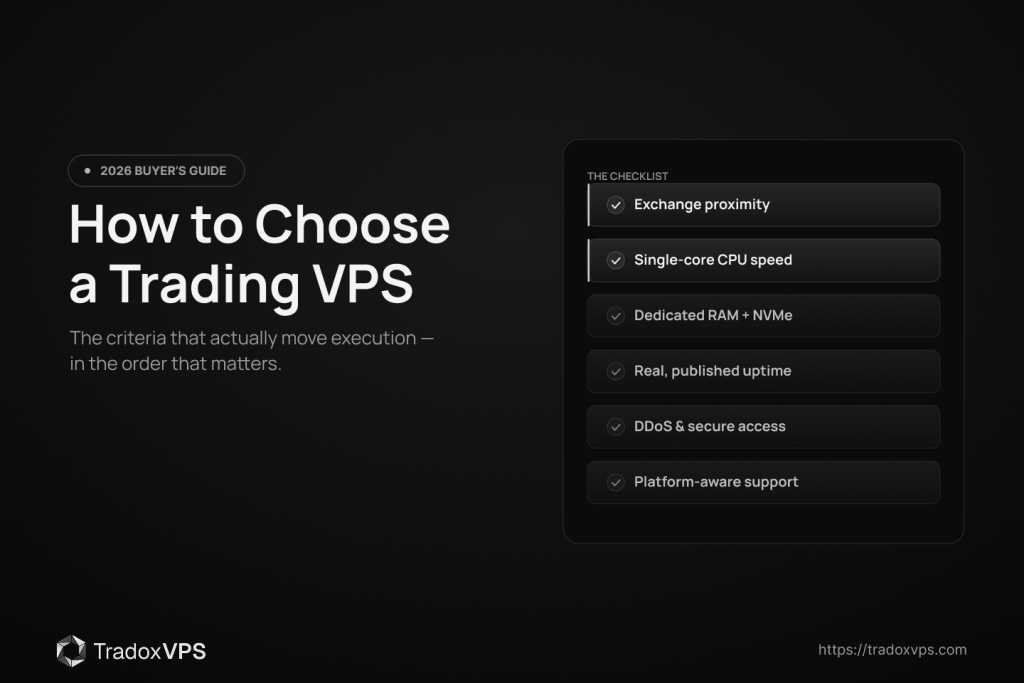
Your VPS is part of your trading equipment — yet most “how to choose” guides hand you a flat checklist where every spec looks equal. It isn’t. This guide ranks the criteria that actually move your execution, in priority order, for futures, forex, and crypto.
TradoxVPS vs ChartVPS: An Honest 2026 Comparison
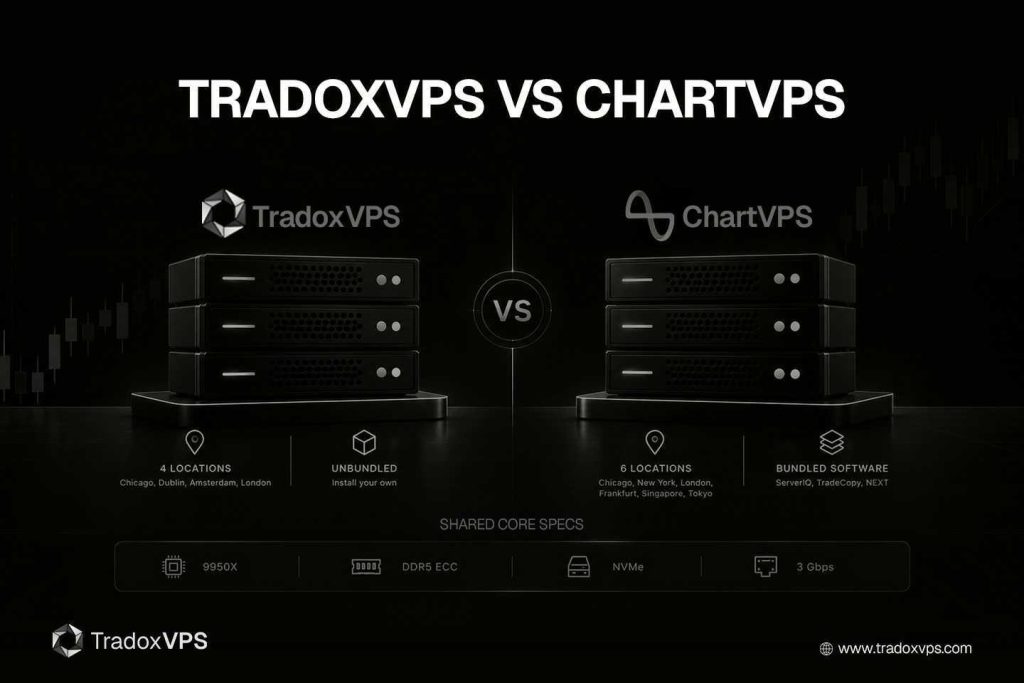
We run TradoxVPS, so here’s the honest version: ChartVPS and TradoxVPS run essentially the same VPS hardware. The real differences are price, locations, and what software comes bundled — here’s how to pick the right one for how you trade.
AI Trading Systems: Infrastructure Requirements Explained
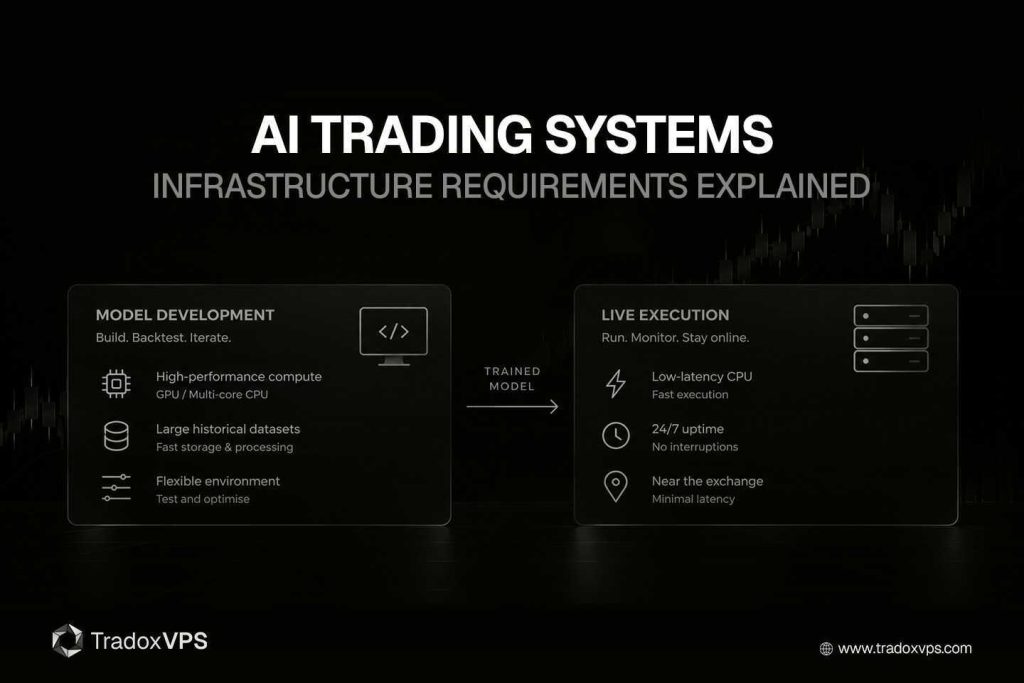
Most confusion about AI trading infrastructure comes from treating it as one thing. It’s really two, with opposite requirements: training a model (compute-heavy, GPU, cloud, offline) and deploying it to trade (low-latency, mostly CPU, near the exchange, 24/7). This guide separates them, busts the myth that AI trading needs a GPU server sitting live in the market, and shows which job a VPS is actually for.
Common Trading VPS Mistakes (and the Honest Fixes)
Buying a trading VPS is easy; getting value out of one trips people up. The costliest mistakes aren’t even technical — they’re believing what the ads imply: HFT speed, zero slippage, an edge in a box. Here are the most common trading VPS mistakes across buying, expecting, and using one — each with the honest fix.
Trading VPS vs Home PC: Which Do You Actually Need? (2026)
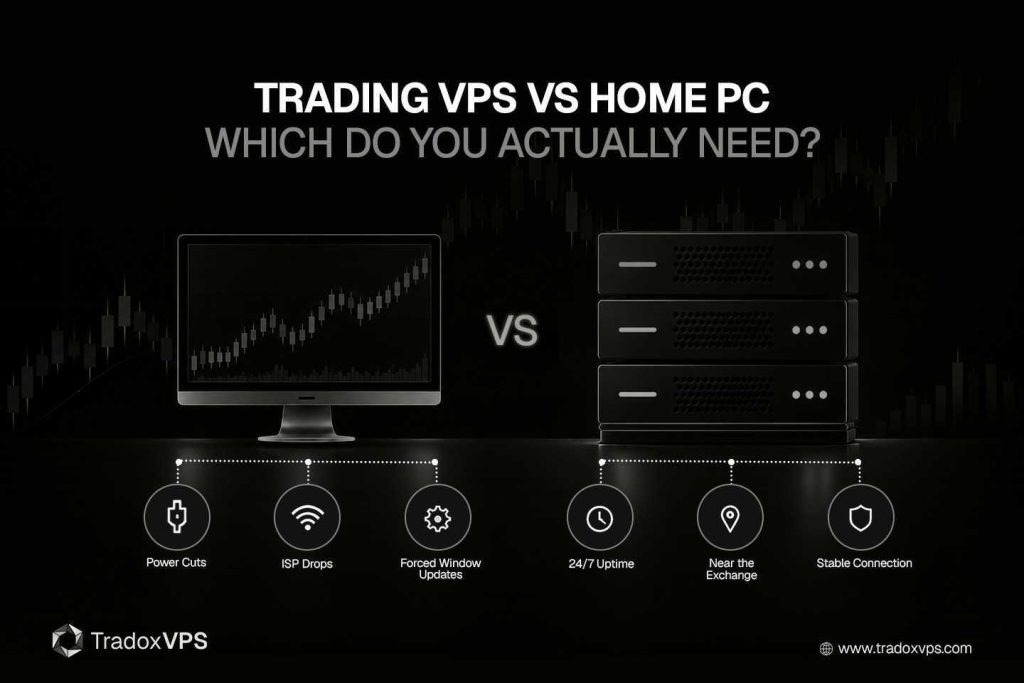
Most “VPS vs home PC” articles are written by VPS companies, so they all land on the same answer: buy a VPS. We sell VPS hosting too — and we’ll tell you something different. A home PC is perfectly fine for a lot of traders, and a VPS is wasted money for some of them. The honest question isn’t which is “better”; it’s what a VPS actually buys you and whether your trading needs it.
How to Optimize a VPS for Algorithmic Trading
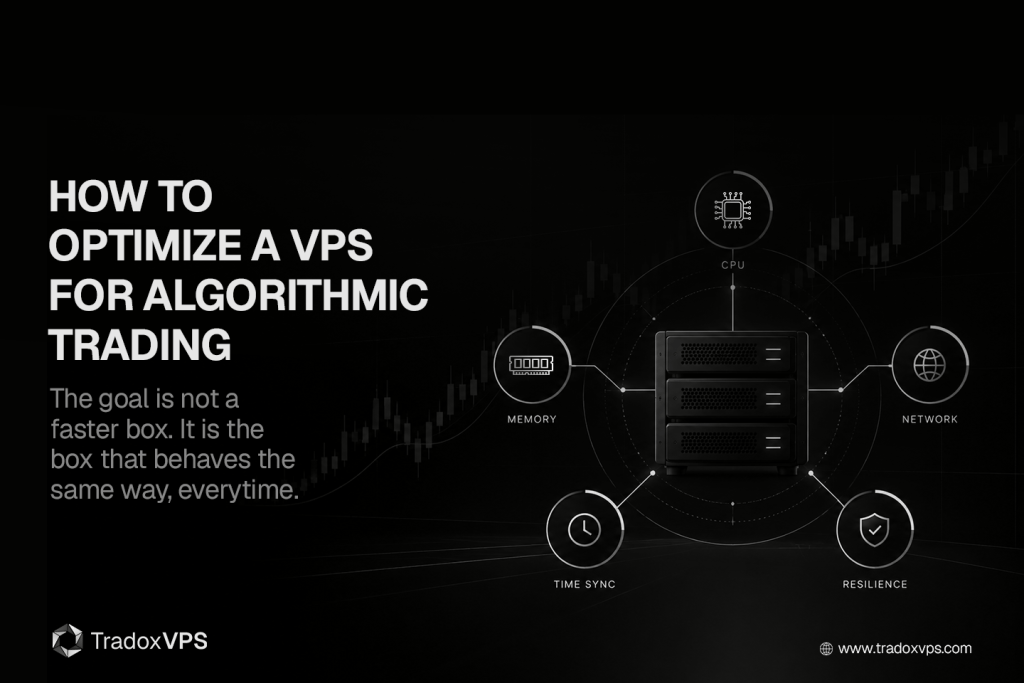
Most guides on optimizing a VPS for algorithmic trading list things you already know: use Linux, use SSD, keep it updated. This is the specific version. It covers the settings that actually change execution consistency, the algo-specific concerns generic tips never mention (time synchronization, process resilience, state recovery on restart), and it’s honest about what tuning a VPS simply cannot do that only bare metal can. The goal isn’t a faster box. It’s one that behaves the same way, every time.
Running Trading Bots 24/7: Why a VPS Is Required
A trading bot’s whole value is being always-on, and a home computer can’t reliably deliver that: power cuts, internet drops, a 2 a.m. forced Windows reboot mid-position. This guide covers the home-setup failures that kill a strategy, what a VPS genuinely fixes, what it can’t (it reduces network delay, not market slippage), and the part most guides skip: keeping the bot itself alive and correct is also your code’s job.
What Is a Trading VPS? A Plain-English Tour (Minus the Marketing)
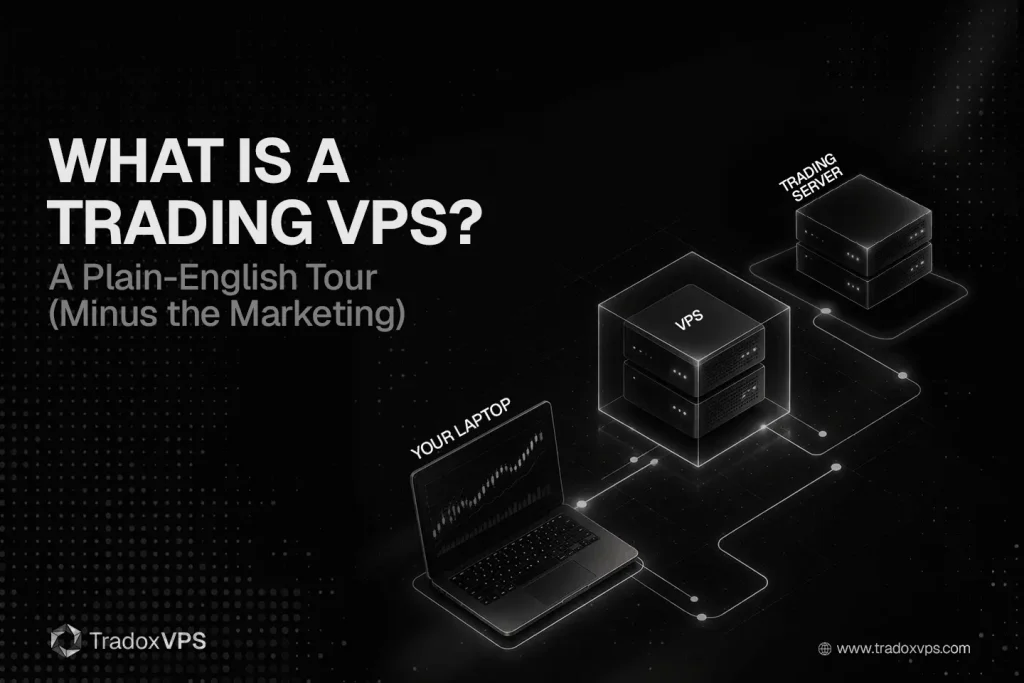
Every “what is a trading VPS” article reads like a brochure. This one doesn’t. Stripped of the marketing, a trading VPS is a computer you rent that lives near the exchange and never turns off — no magic, no edge in a box. Here’s the complete plain-English version: what it actually is, how the three letters work, what separates a real trading VPS from a cheap web box, how to set one up, whether it’s safe, and the honest answer to whether you need one at all.