
VPS vs VPN for Trading: What’s the Difference (and Which You Need)
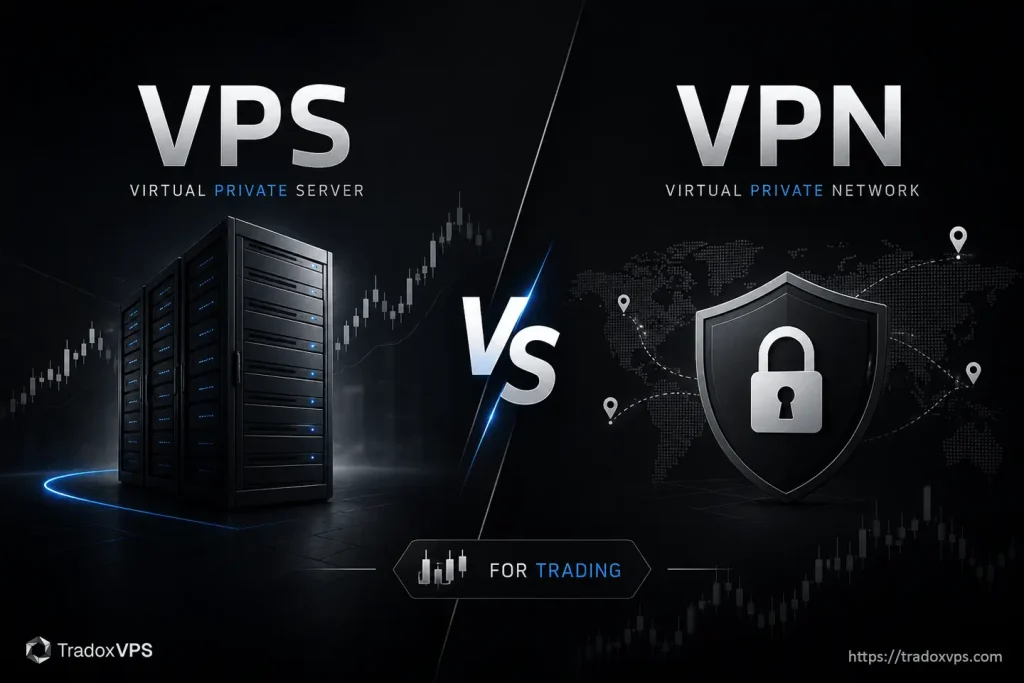
The two acronyms look almost identical, which is exactly how traders end up buying the wrong tool — or bolting a VPN onto their setup expecting faster fills and getting slower ones. A VPS is a computer that runs your trading; a VPN is a tunnel that reroutes your traffic. Here’s what each actually does, what it does to your latency, and how serious traders use them together.
Best High-Frequency Trading Algorithms: How They Actually Work
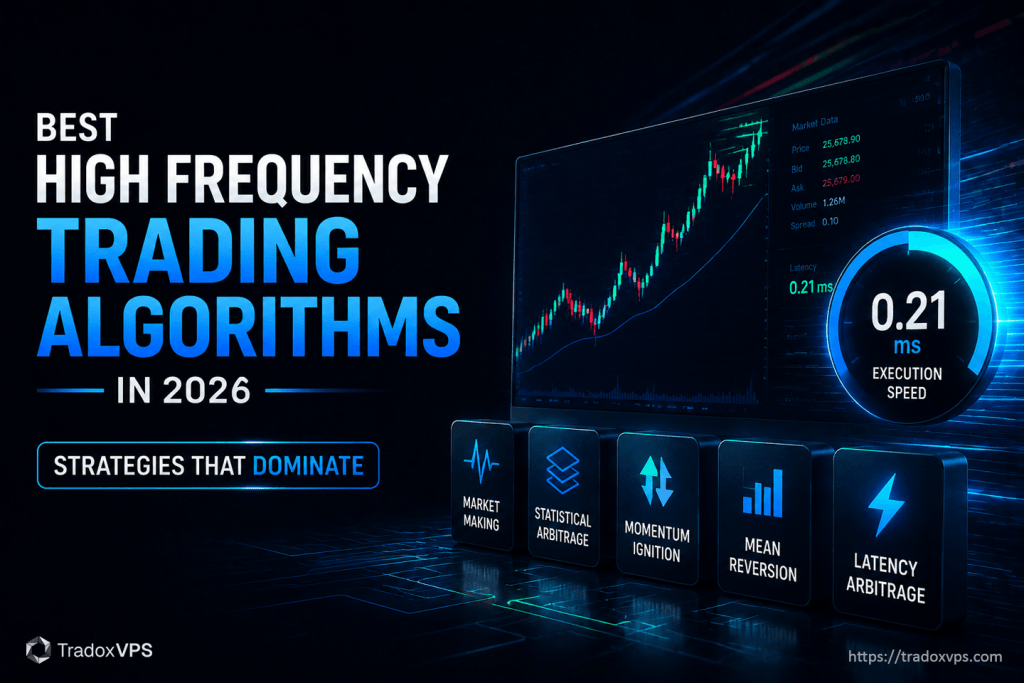
Search “best high-frequency trading algorithms” and you get hype or sales pitches. The real picture is more useful: the algorithms are mostly well understood, the genuine edge is speed, and the speed is institutional. Here’s an honest tour of the actual HFT strategy families — how each works, the infrastructure it needs, where the legal line sits, and what a serious trader can really run.
How to create a trading algorithm: from code to live execution in 2026
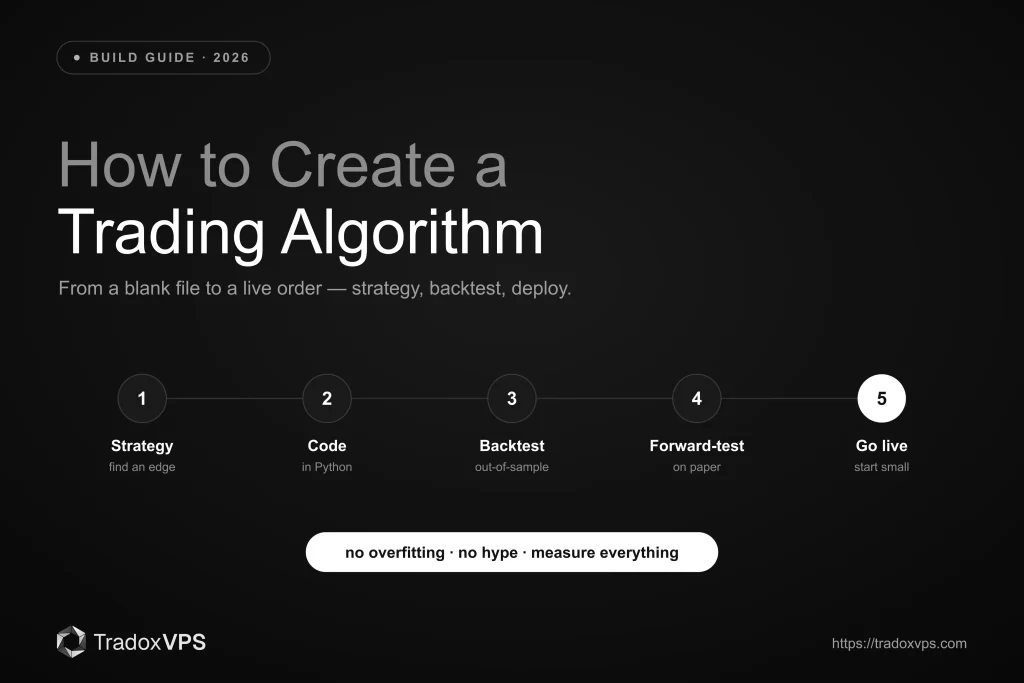
Writing the algorithm is the easy part — a moving-average crossover is twenty lines of Python. The hard part is proving the edge is real, surviving the jump from backtest to live, and staying online when it matters. Here’s the full path, with the 2026 tools that are actually maintained.
Day Trading Psychology: Why You Break Your Own Rules (and How to Stop)
You already know the rules — cut losses, let winners run, don’t oversize. You still moved the stop. The problem was never knowledge; it’s that your brain runs software built for survival that’s actively wrong for trading, and willpower loses to it. Here’s the real mechanics behind why disciplined people break their own rules, backed by the behavioral-finance research, and the mechanical systems that beat the wiring.
Top 10 algo trading platforms for high-performance execution in 2026
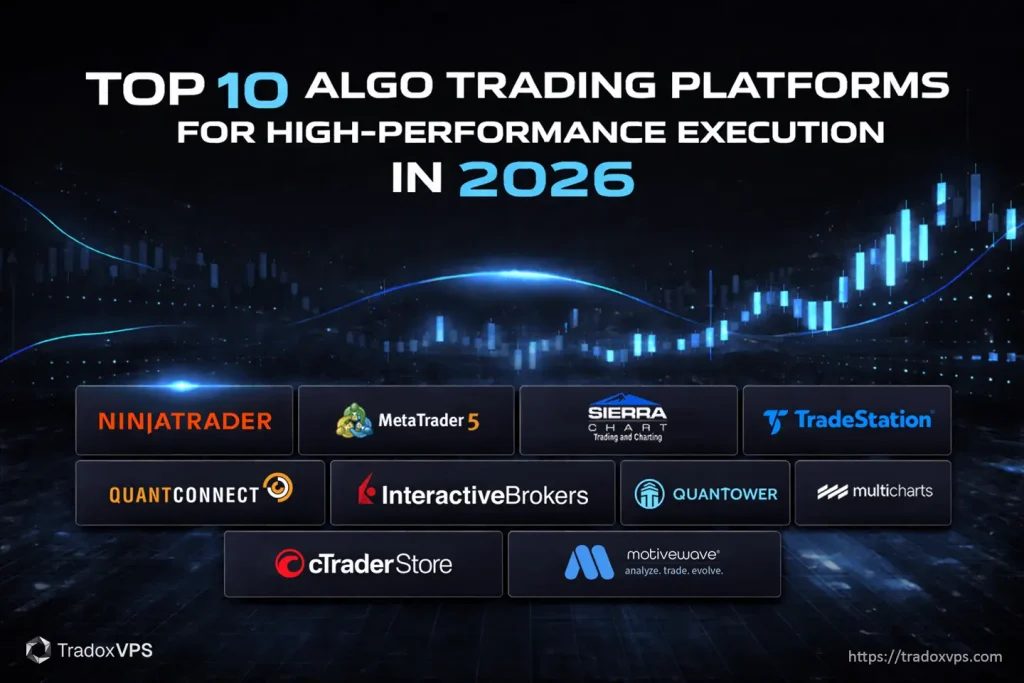
Algorithmic trading success depends on more than just code. We tested the top 10 platforms for 2026, focusing on execution speed, language support, and infrastructure compatibility.
How to Install TradingView on a VPS (Step-by-Step)
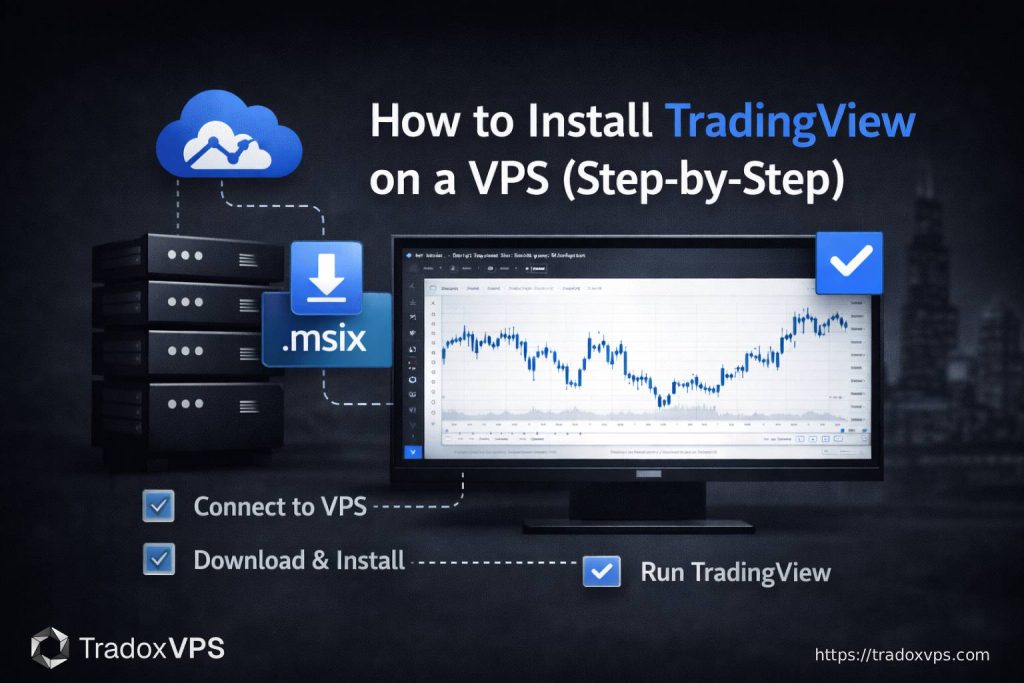
Trying to install TradingView on a Windows Server VPS and hitting the “Windows cannot open this type of file (.msix)” error? This step-by-step guide fixes it with a simple PowerShell command (installing the VCLibs dependency), then shows you how to connect to your VPS, set up alerts and webhooks, and keep your automation running 24/7. Includes a troubleshooting table and FAQ.
TradoxVPS vs QuantVPS: A Spec-by-Spec Comparison for NinjaTrader
Choosing between TradoxVPS and QuantVPS for futures? This is the spec-by-spec version, compared fairly — Ryzen to Ryzen. NinjaTrader runs on one core, and the Ryzen 9950X on every TradoxVPS plan is about 14% faster single-thread than the 7950X3D on QuantVPS’s Performance tier — and cheaper at every matched tier. Here are the benchmarks, the matched-price specs, and an honest look at where QuantVPS still wins.
TradoxVPS vs ForexVPS.net: An Honest 2026 Comparison
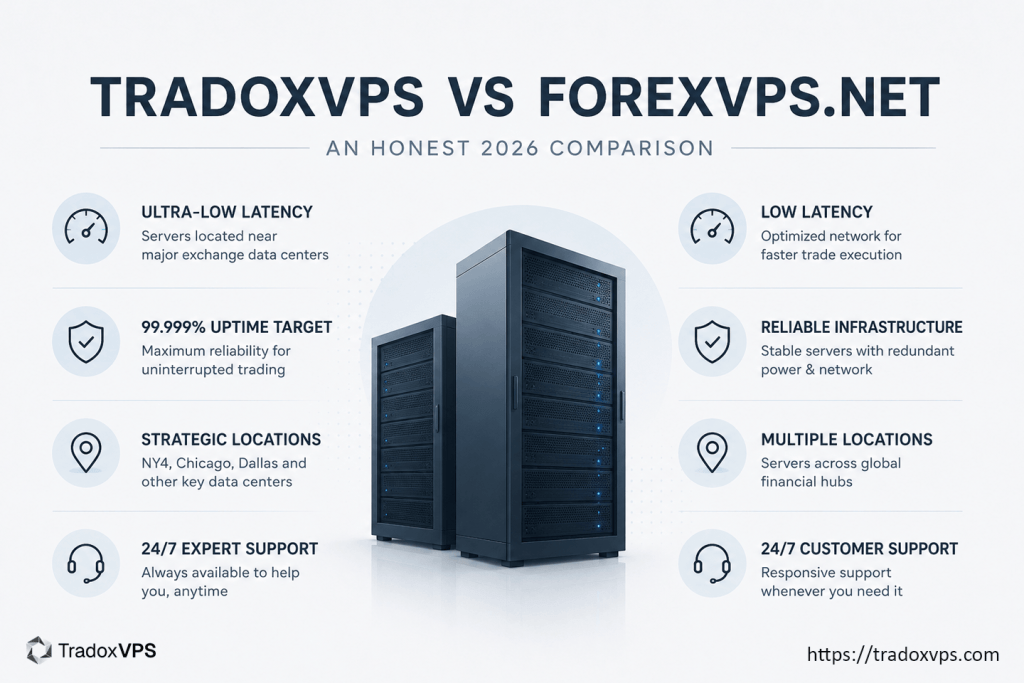
We make TradoxVPS, so here’s the honest version: ForexVPS.net is a forex specialist with 22 broker-adjacent locations, while TradoxVPS is built for CME futures, Polymarket and high-clock Ryzen hardware. Here’s how to pick the right one for how you trade.
How to Check Viruses and Malware on a VPS Running Windows OS
If your trading VPS suddenly runs hot, lags at the worst moments, or your broker shows logins you did not make, it is worth checking for malware properly. This guide gives you the exact commands to scan a Windows VPS, the specific signs a trading box is infected, and a clear decision tree for what to do when something turns up.
VPS Security Best Practices for Trading Automation
A trading VPS is a money-adjacent production server, and attackers treat it that way. This guide covers the real 2026 threat model (RDP brute force, trader-targeted malware, API key theft), a layer-by-layer hardening plan for Windows and Linux, the trading-specific controls most guides skip, and a first-15-minutes incident runbook.