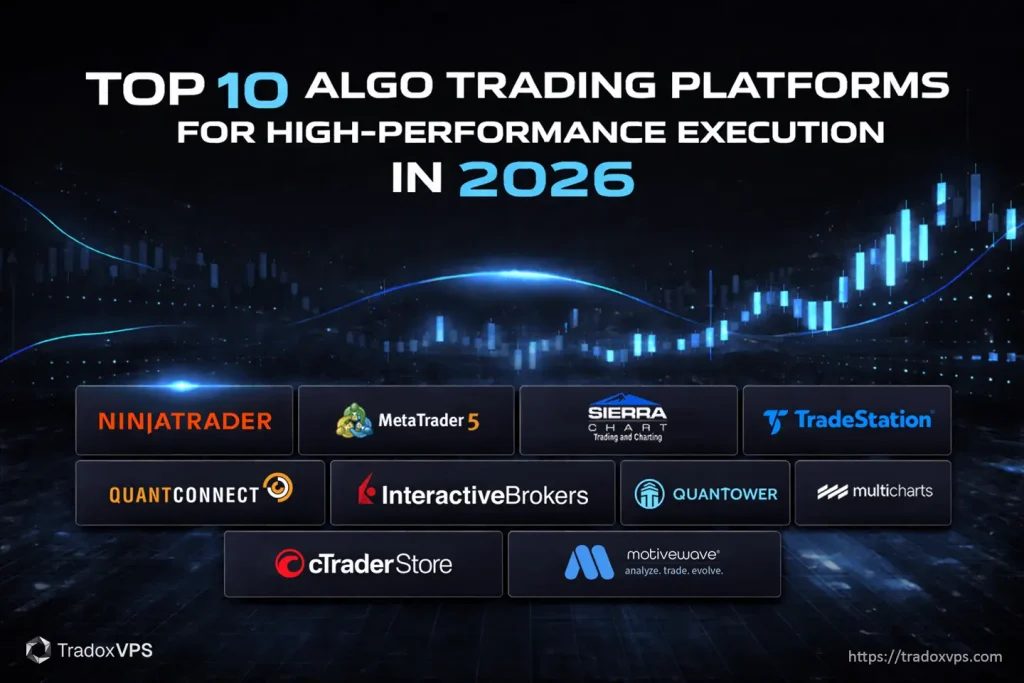
Most retail algo trading platforms pass the backtest but fail the live market because they ignore the infrastructure layer. We compared the top 10 options for 2026 on the three things that decide live performance: execution architecture, backtesting depth, and API and language support. The differentiator that separates winners from losers, below.
Algorithmic trading is no longer the exclusive domain of high-frequency funds and institutional players. The shift toward retail automated trading has accelerated, with sophisticated tools now accessible to anyone with a strategy and an internet connection. However, as more traders enter the fray, the competition for execution speed has intensified. Success in 2026 depends on more than just the logic of your code; it requires a deep understanding of the infrastructure that powers your bots.
Why infrastructure matters for the best algo trading platforms
A common mistake among new algorithmic traders is focusing entirely on the strategy while ignoring the execution environment. Even the most profitable algorithm can be rendered useless by high latency or CPU throttling. This is where single-core performance becomes the bottleneck. Many modern trading platforms like NinjaTrader or Sierra Chart are highly dependent on the speed of a single processor core to handle live tick feeds and order calculations.
We use AMD Ryzen 9 9950X processors because their Zen 5 architecture delivers single-core clock speeds up to 5.7GHz — far higher than the ~2–3.7GHz typical of many-core server CPUs. That matters because platforms like NinjaTrader and Sierra Chart lean heavily on single-core speed, where these extra gigahertz help you act on a price instead of chasing it. Your server’s physical location relative to the exchange matters too: for futures traders, our Chicago VPS hub sits in the Chicago metro, close to the CME’s matching engines in Aurora, IL, which shortens the network path your data and orders travel. How much that helps depends on your broker and how your orders are routed — network proximity is one piece of execution quality, not the whole story — but for latency-sensitive strategies, a shorter path means your fills sit closer to the price your strategy actually saw.
How we chose the platforms
To identify the top contenders for this year, we evaluated each platform across three pillars: execution speed, backtesting depth, and API reliability. A platform that provides a beautiful interface but lags during a FOMC announcement is a liability, not an asset.
Beyond raw speed, we looked at programming language support. Whether you prefer the robustness of C#, the flexibility of Python, or the efficiency of C++, the best algo trading platforms must support your workflow without forcing you into a proprietary corner. Finally, 24/7 VPS compatibility is non-negotiable. Your strategies need a stable, always-on environment with a 99.999% uptime target to capitalize on global market moves while you sleep.
The 10 best algo trading platforms for high performance
The following table summarizes how the top platforms compare across key dimensions.
| Platform | Primary Asset | Programming Language | Execution Edge |
|---|---|---|---|
| NinjaTrader | Futures | C# | Massive Ecosystem |
| MetaTrader 5 | Forex / CFDs | MQL5 | Global Standard |
| Sierra Chart | Futures | C++ (ACSIL) | Native Efficiency |
| TradeStation | Multi-Asset | EasyLanguage | Institutional DMA |
| QuantConnect | Multi-Asset | Python / C# | Cloud LEAN Engine |
| Interactive Brokers | Global Markets | Python / Java / C++ | Unmatched Access |
| Quantower | Futures / Crypto | C# (.NET) | Modern Strategy Runner |
| MultiCharts | Multi-Asset | PowerLanguage / C# | Genetic Optimization |
| cTrader | Forex / CFDs | C# (.NET) | Visual Backtesting |
| MotiveWave | Multi-Asset | Java | Pattern Recognition |
1. NinjaTrader
NinjaTrader is widely considered the industry standard for futures trading. Its modern C#-based development framework, NinjaScript, allows for the creation of institutional-grade automated strategies. With over 1.9 million users, the platform benefits from a massive ecosystem of third-party apps, indicators, and developers.
For those who are not developers, NinjaTrader offers a “point and click” strategy builder that simplifies the automation process. However, the platform truly excels when paired with a high-performance VPS, where its C# logic can run with maximum efficiency. To fully unlock its potential, many traders opt for the NinjaTrader VPS setups that we provide in Chicago.
Pros:
- Advanced charting and specialized futures trading plans.
- Native C# support for complex automation.
- Extensive free simulated trading for strategy testing.
Cons:
- High one-time license cost for the lowest commission tiers.
2. MetaTrader 5
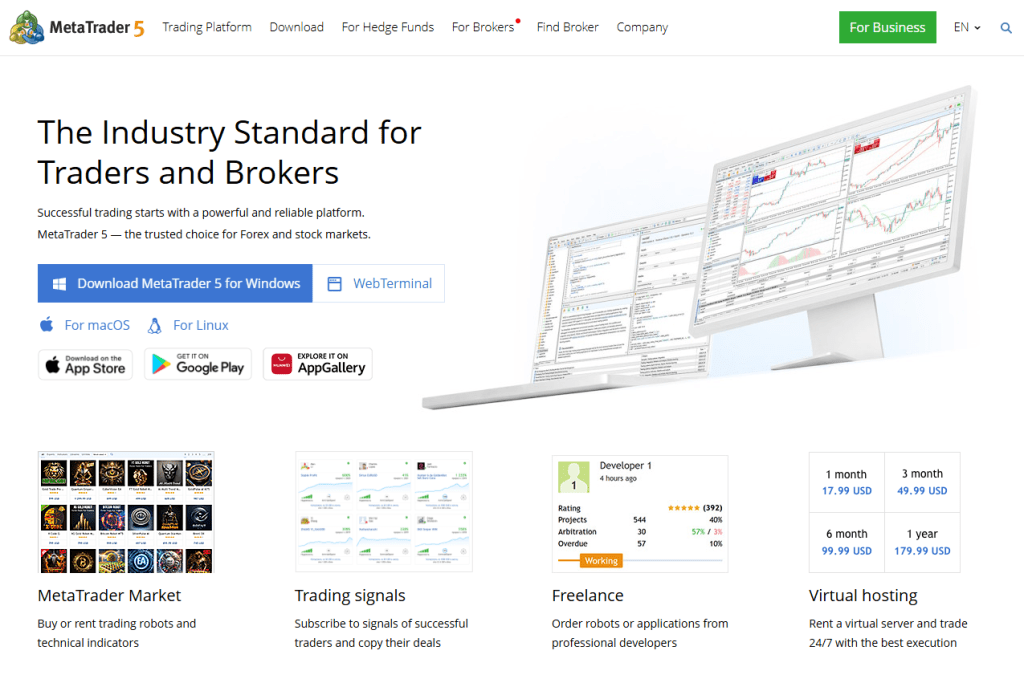
MetaTrader 5 (MT5) is the global leader for Forex and CFD trading. Developed by MetaQuotes, it provides a complete development cycle within the MQL5 IDE, including creation, debugging, and testing. The platform’s Strategy Tester is a standout feature, supporting multi-threaded and multi-currency optimization across a distributed network.
Pros:
- Completely free for individual traders.
- Access to thousands of Expert Advisors (EAs) in the MetaTrader Market.
- Highly reliable and lightweight on system resources.
Cons:
- MQL5 is a proprietary language with a specific learning curve.
3. Sierra Chart
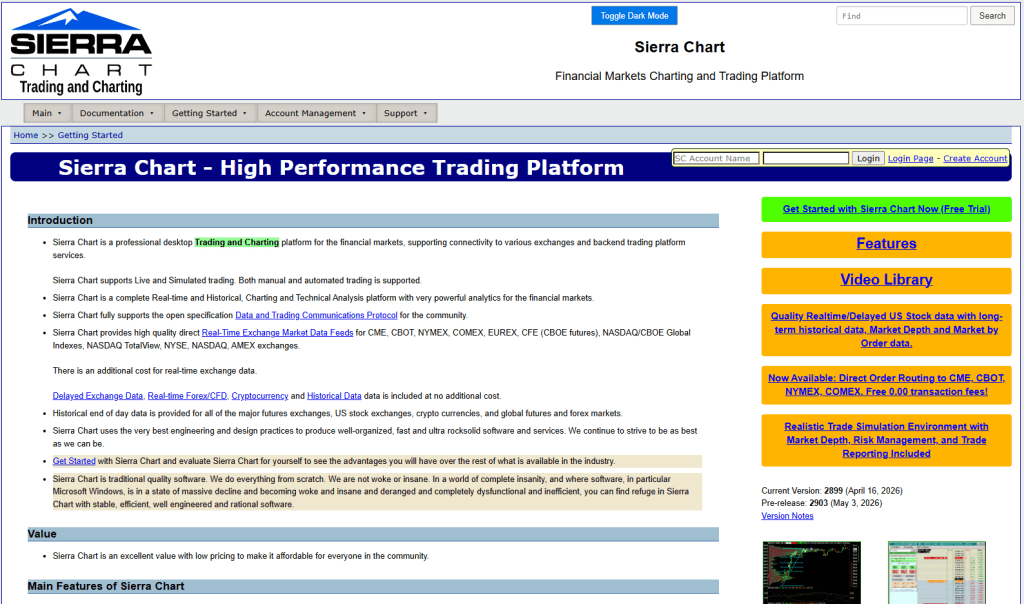
Sierra Chart is a professional desktop platform designed for extreme performance. Built using 100% native C++ code, it avoids the resource overhead associated with Java or .NET, making it one of the fastest and most stable options for serious traders. Its ChartDOM and support for the DTC Protocol make it a favorite for ultra-low latency setups.
Pros:
- Ultra-low latency and native C++ support via ACSIL.
- Robust, engineering-first software footprint.
- Highly customizable interface for professional configurations.
Cons:
- Steep learning curve and dated UI.
4. TradeStation
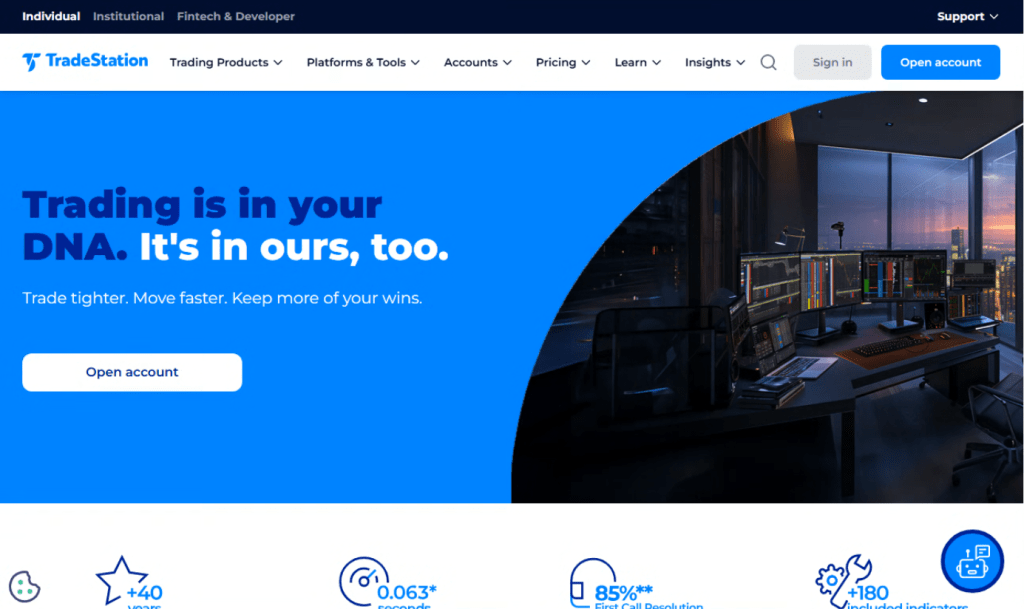
TradeStation offers institutional-grade tools for stocks, options, and futures. Its proprietary language, EasyLanguage, uses plain-English syntax, making it one of the most accessible platforms for beginners. The platform’s RadarScreen tool provides real-time market monitoring, and its recent integration with Model Context Protocol (MCP) allows for AI-assisted strategy development.
Pros:
- Integrated brokerage with powerful backtesting.
- Professional-grade futures margin requirements.
- Comprehensive historical data archive.
Cons:
- Subscription fees can add up for low-volume accounts.
5. QuantConnect
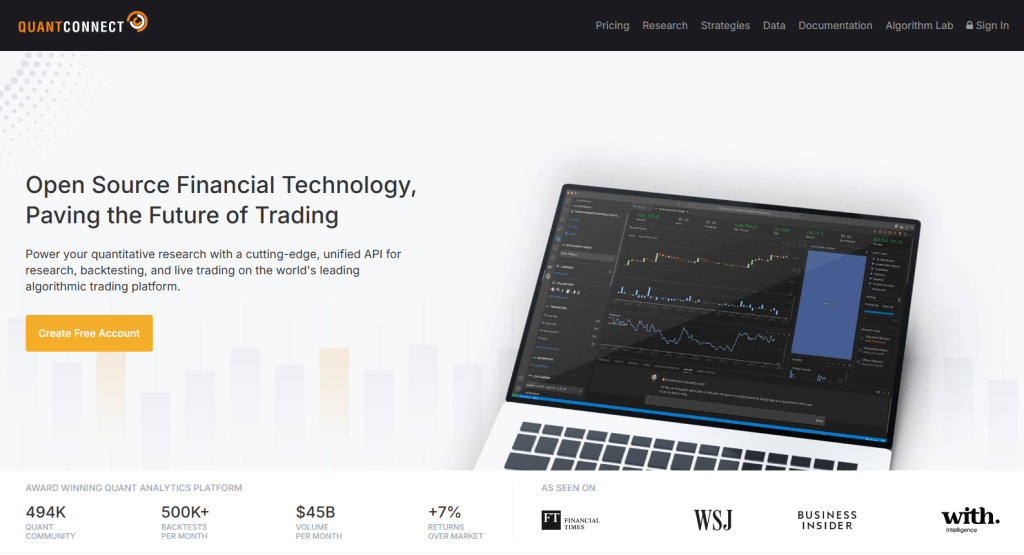
QuantConnect is a cloud-based, open-source platform powered by the LEAN engine. It provides a unified infrastructure for quantitative research, backtesting, and live trading. Its cloud research environment and agentic AI assistant make it a powerhouse for modern quants who prefer Python or C#.
Pros:
- Access to terabytes of data in the Datasets Marketplace.
- Open-source LEAN engine for transparency.
- Seamless transition from research to production.
Cons:
- Web-based IDE may be less flexible for some HFT requirements.
6. Interactive Brokers
Interactive Brokers (IBKR) is the gold standard for brokerage APIs. It provides access to over 150 global markets, supporting languages like Python, Java, and C++. The IBKR APIs are favored by developers who require deep liquidity and competitive market data pricing.
Pros:
- Unmatched global market access and low commissions.
- Highly secure and financially strong.
- Robust API with extensive documentation.
Cons:
- Trader Workstation (TWS) can be complex for beginners.
7. Quantower
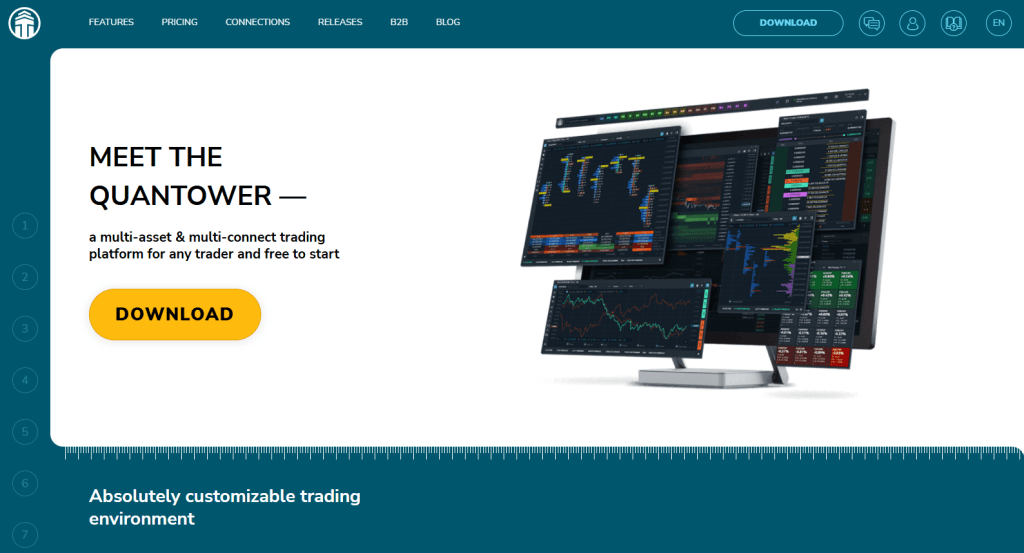
Quantower is a modern, multi-asset platform that has gained significant traction among futures and crypto traders. Its C# (.NET) API allows for deep customization, while the Strategy Runner panel makes it easy to monitor multiple bots simultaneously.
Pros:
- 60+ broker and exchange connections.
- Modern, highly intuitive user interface.
- Advanced Order Flow and Options analytics.
Cons:
- Full algo support requires a Pro or All-in-One subscription.
8. MultiCharts
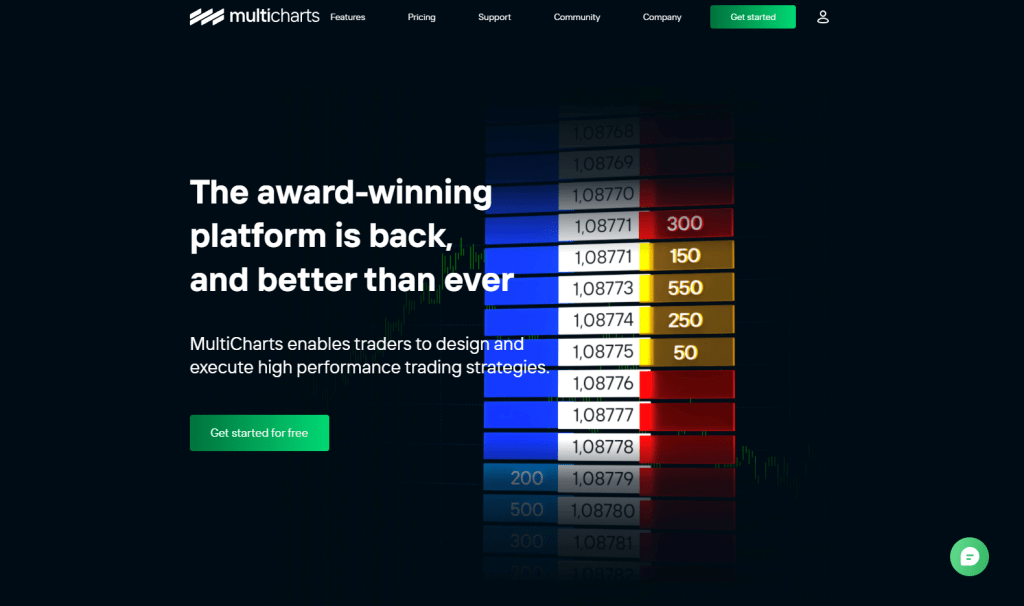
MultiCharts is known for its institutional-grade backtesting and genetic optimization. It supports PowerLanguage (EasyLanguage compatible) and a dedicated .NET version for C# developers, making it a versatile choice for quantitative traders.
Pros:
- Industry-leading portfolio-level backtesting.
- Easy migration for EasyLanguage users.
- Robust data management and cleanup tools.
Cons:
- High lifetime license cost ($1,497).
9. cTrader
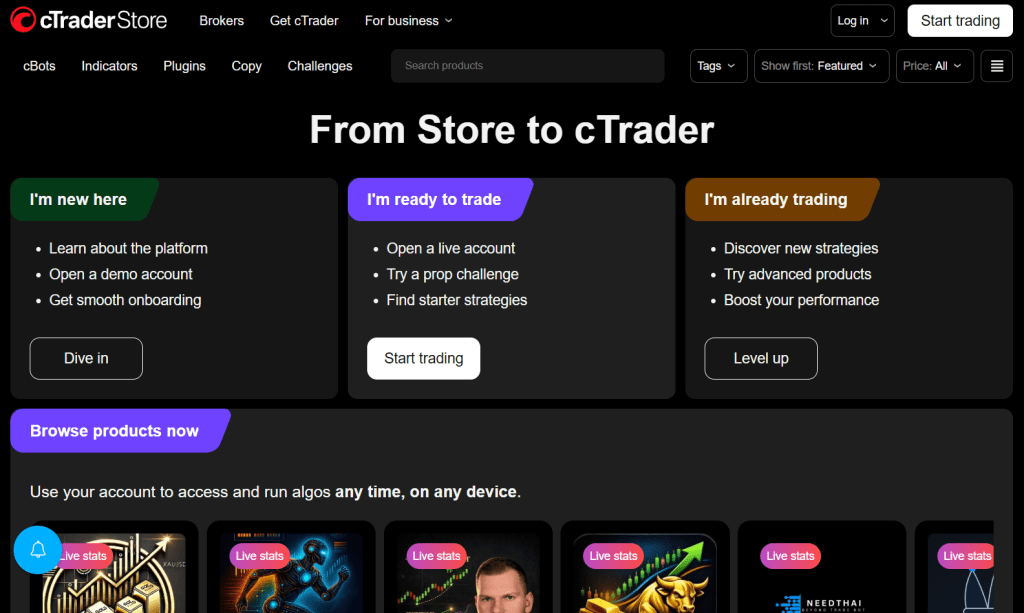
cTrader is the premier choice for retail Forex traders who prefer C# over MQL. Its Automate environment is modern and user-friendly, and its Open API allows for external tool integration. Many brokers provide cTrader free of charge, making it highly accessible.
Pros:
- Native C# integration for high-speed bot development.
- Free to use via supported brokers.
- Clean, modern interface with built-in copy trading.
Cons:
- Primarily focused on Forex and CFDs.
10. MotiveWave
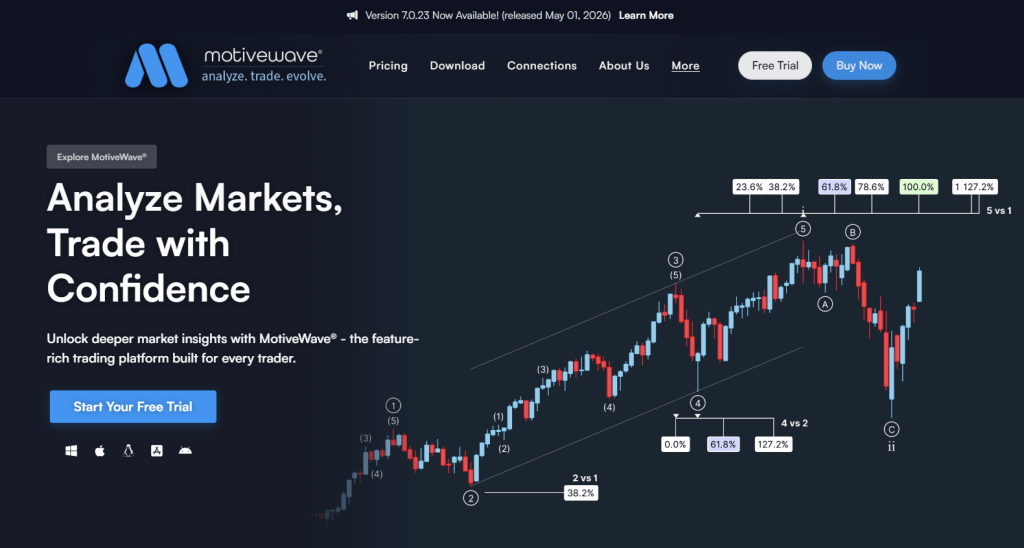
MotiveWave is a specialized platform for advanced technical analysis, including Elliott Wave and Harmonic Patterns. For developers, its Java SDK offers a robust framework for building complex strategies. It is also one of the few professional platforms with native macOS support.
Pros:
- Best-in-class Elliott Wave and pattern recognition tools.
- Native macOS and Windows support.
- Flexible Java-based automation SDK.
Cons:
- Professional/Ultimate editions required for algo trading.
The Infrastructure Edge: Why hardware is your real competitive advantage
While choosing the right software is critical, your platform is only as fast as the hardware it runs on. Regardless of whether you use NinjaTrader’s C# or Sierra Chart’s C++, your execution logic is ultimately executed by a CPU. In the high-stakes world of algorithmic trading, hardware-level latency can be the silent killer of profitable strategies.
This is why we built TradoxVPS on the Ryzen 9 9950X. Standard server CPUs are designed for many slow tasks; trading platforms need one very fast task. With clock speeds hitting 5.7GHz, our Zen 5 architecture ensures your platform remains responsive during market spikes, preventing the “UI freeze” or calculation lag that often leads to missed exits.
| Plan | Monthly Price | Key Limits/Inclusions |
|---|---|---|
| Starter Trader VPS | $39 | 2 Cores, 6GB DDR5 RAM, 75GB NVMe SSD |
| Active Trader VPS | $69 | 4 Cores, 12GB DDR5 RAM, 150GB NVMe SSD |
| Advanced Trader VPS | $99 | 6 Cores, 18GB DDR5 RAM, 250GB NVMe SSD |
| High Performance VPS | $129 | 8 Cores, 24GB DDR5 RAM, 300GB NVMe SSD |
| Ultra Low Latency VPS | $179 | 12 Cores, 36GB DDR5 RAM, 500GB NVMe SSD |
| Max Performance VPS | $249 | 16 Cores, 48GB DDR5 RAM, 750GB NVMe SSD |
By locating our primary infrastructure in the Chicago metro, we keep your platform on a short network path to the CME’s Aurora data center. That proximity, combined with enterprise-grade NVMe storage and DDoS protection, provides the stable, 24/7 environment required for reliable bot execution.
Choosing the right platform for your strategy
The “best” platform depends entirely on your asset class and technical skill. If you are a futures trader who prioritizes raw performance, a combination of Sierra Chart and a high-spec Chicago VPS is hard to beat. If you are a Forex trader looking for a massive community, MetaTrader 5 is the logical choice. For modern developers who want cloud-native flexibility, QuantConnect stands out.
Don’t make the mistake of over-optimizing your code while neglecting your hardware. In 2026, the market rewards the efficient and punishes the slow.
Start optimizing with TradoxVPS
Building a high-performance algorithmic trading setup requires quality at every level. By pairing the right software with world-class infrastructure, you give your strategies the best possible chance of success.
Ready to put your bots on a CME-proximal network path? Explore our Chicago VPS locations and browse our Ryzen 9950X plans today.
Frequently Asked Questions
No — many platforms offer no-code strategy builders or marketplaces where you can rent pre-built bots. That said, learning a language like C# or Python gives you far more room to customize.
Algo strategies process large volumes of market data in real time. A high-clock-speed CPU like the Ryzen 9 9950X keeps your platform executing trade logic without being throttled by single-core limits — the bottleneck for engines like NinjaTrader and Sierra Chart.
Latency is the time it takes information and orders to travel between your platform and the exchange. Even a few milliseconds of extra delay can mean more slippage — entering or exiting at a worse price than your strategy intended.
Yes. Our higher-tier plans provide enough RAM and CPU cores to run several platforms or instances at once — just pick a tier sized for your workload, such as the Max Performance VPS.
MetaTrader 5 is the de facto standard for forex and CFDs, thanks to its huge community and the thousands of Expert Advisors available for it.
Yes. MetaTrader 5 and the community tier of QuantConnect are free to use, and cTrader is often provided free by brokers. Others (NinjaTrader, MultiCharts) charge a subscription or one-time license for full features.
Sierra Chart is a common pick for low-latency setups because of its native C++ architecture, while NinjaTrader remains the standard for institutional-grade futures automation.