First month 25% off for new traders — code

right line
left line
Sierra Chart VPS

Sierra Chart VPS Built to Never Stop Running

Sierra Chart does its best work running continuously: recording every tick, computing your studies, and executing your ACSIL and spreadsheet systems. A VPS is the always-on machine that keeps all of it alive, on Chicago hardware a short hop from CME.
Trading VPS Pricing

Sierra Chart VPS Pricing

Every plan runs the current-generation AMD Ryzen 9 9950X with DDR5 and NVMe, in the Chicago metro on CME-proximal infrastructure, a short network path from the CME Group matching engines in Aurora that Sierra Chart’s Denali data and Teton routing connect to. Size the plan to your chart count, your order-flow tools, and how much tick data you record.
Why Sierra Chart VPS

Sierra Chart Is Built to Run Continuously. A VPS Is the Machine That Lets It.

Every tick, every study, every ACSIL system exists only while the app is open. On your own machine that line breaks the moment you sleep, reboot, or close the lid. On a VPS it never breaks.
Your PC · breaks overnight Chicago VPS · one unbroken session
Your PCrecords in fits
asleep
reboot
closed
Chicago VPSrecords nonstop
Recording · ACSIL · studies, without a gapRecording, without a gap
00:0006:0012:0018:0024:00

Unbroken tick history

Recording continues overnight and over weekends, so your intraday data builds with no holes to patch later.

Automation that never pauses

ACSIL and spreadsheet systems keep executing around the clock, not just while you are at your desk.

Steady session near CME

Denali data and Teton routing sit on data-center networking a short hop from Aurora, not your home Wi-Fi.

One honest note: Sierra Chart's Teton routing holds your OCO and bracket orders server-side at the exchange, so a VPS is not there to protect those. The unbroken line above is about what runs on your machine, the recording, studies and automation, which is where a VPS genuinely earns its place.
How Sierra Chart Run

Everything a Sierra Chart Desk Needs

Denali and Teton, natively

Run Sierra Chart's own Denali data feed and Teton order routing, built in-house on one codebase with no third-party bridge. Options are not supported on Teton; confirm your instruments.

Rithmic and CQG too

Prefer a third-party rail, or trading a prop-firm account on Rithmic? Sierra Chart connects through Rithmic and CQG here just as well.

Order-flow under load

Numbers Bars footprint, the DOM, MBO and up to 1400 depth levels per side redraw on every tick. Current-generation single-core speed keeps them smooth through a volatile open.

Many charts, many monitors

Detach chart windows across multiple monitors and run large chartbooks, driven over Remote Desktop, with the cores and RAM to match on higher tiers.

Short path to the exchange

Chicago-metro hosting sits a short network hop from CME's Aurora data center. Denali and Teton both benefit from a short, steady path; measure the round-trip yourself.

Always-on, protected

Redundant power and networking, network-level DDoS mitigation, and a 99.999% uptime target you can check against our public status page.

Connects through Sierra Chart
Denali Teton Rithmic CQG ACSIL Spreadsheet systems

The all-Sierra stack uses Denali data with Teton routing; prop-firm accounts are often on Rithmic. Setups change, so confirm the current options in Sierra Chart's own documentation.
Core Values

What Drives TradoxVPS

Our commitment to excellence is built on these fundamental principles
Ryzen 9 9950X CPU

Ryzen 9 9950X CPU

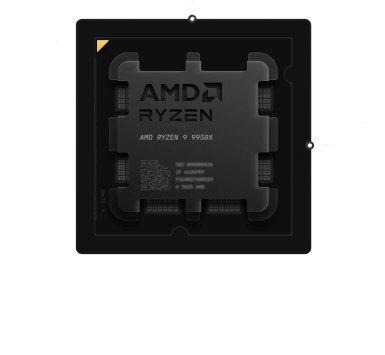
Every plan runs AMD’s current-generation Ryzen 9 9950X (Zen 5), boosting up to 5.7 GHz. Sierra Chart’s order-flow tools lean hard on single-core speed, and we publish real per-plan PassMark scores on our benchmarks page.

Ultra-Low Latency

Our Chicago hub sits a short network hop from CME-adjacent infrastructure. We do not stamp a millisecond figure on the page, because a ping is not your order round-trip. Test the path from your own location with our latency checker.

99.999% Uptime

We target five-nines availability through redundant infrastructure, enterprise hardware, and 24/7 monitoring, and we publish the real history on our status page.
advanced network for trading

Advanced Network

3 Gbps of throughput with unlimited bandwidth and a dedicated IPv4 that is yours alone, plus network-level DDoS mitigation that absorbs hostile traffic before it reaches your server.
Rail & Connection Table

How Sierra Chart Connects, And What The VPS Hosts

Sierra Chart can run its own native stack or connect through a third-party rail. Here is how the common setups map, and what the always-on VPS hosts for each. Options and instruments change, so confirm the current setup on Sierra Chart’s own documentation before you commit.
How Sierra Chart connectsVerify current setup
Setup Data feed Order routing The always-on layerWhat the VPS hosts
All-Sierra (native) Denali Teton, direct-to-exchange The desktop app, tick recording, ACSIL
Prop firm on Rithmic Rithmic Rithmic The desktop app, studies, local automation
Broker on CQG CQG CQG The desktop app, order-flow tools, recording
Data-only / research Denali or Delayed None Continuous recording, studies, backtesting
Environment Comparison

Sierra Chart VPS vs Home PC vs Generic VPS

See how a Sierra Chart VPS compares to other trading setups
What Actually Changes
Features Home PC Generic VPS TradoxVPSSierra Chart VPS
Continuous Tick Recording Stops when the PC sleeps Unmanaged Runs 24/7, NVMe storage
ACSIL & Spreadsheet Automation Dies with your machine Unmanaged Runs around the clock
CPU Under Order-Flow Load Consumer-grade Older shared silicon Ryzen 9950X, published benchmarks
Path to CME / Aurora ISP dependent Variable Chicago metro, measure it yourself
Remote Access Limited Yes Secure RDP from any device
Uptime Your home power and ISP Often unstated 99.999% target, public status page

Sierra Chart's Teton routing holds OCO and bracket orders server-side at the exchange, so none of the above is about rescuing resting orders. It is about keeping the desktop app, your recording and your local automation running.

Ideal For

Is This Sierra Chart VPS Right for You?

This VPS is suitable for:

check-icon
Sierra Chart users requiring stable performance
check-icon
Traders using advanced charting and custom studies
check-icon
Traders running Sierra Chart continuously
check-icon
Professionals seeking reliable remote access
check-icon
Traders who want a clean, low-maintenance setup
If Sierra Chart is a core part of your trading workflow, a dedicated VPS provides peace of mind and consistency.
Related Blogs

Explore Related Blogs

Rithmic vs Tradovate comparison for 2026 — execution infrastructure versus an all-in-one retail futures broker
Futures & NinjaTrader
|
9 min read
Best futures copy trading platforms for prop traders — the copiers that work and the per-firm rules that decide what you can run.
Futures & NinjaTrader
|
17 min read
Quick Answers

Frequently Asked Questions

Everything you need to know about our Sierra Chart VPS

Is this VPS compatible with Sierra Chart?

Yes. It is a full Windows Server environment, so Sierra Chart installs and runs exactly as on a desktop, including the Denali data feed, Teton order routing, ACSIL custom studies, spreadsheet systems, and connections through Rithmic or CQG.
Not for the orders themselves. Teton keeps your OCO and bracket orders, and its risk limits, on its servers at the exchange, so those survive a disconnect. A VPS matters for everything Sierra Chart runs locally: continuous tick recording, ACSIL and spreadsheet automation, custom studies and alerts. Those only run while the app is open, so an always-on machine keeps them alive.
Yes, that is the main reason to use one. ACSIL studies, spreadsheet trading systems and continuous tick-data recording all run inside the desktop app, and on an always-on VPS they keep working overnight and over weekends while your own machine is off.
Yes to all. You can run Sierra Chart’s native Denali data feed and Teton routing, or connect through a third-party rail like Rithmic or CQG, for example on a prop-firm account. Note that Teton does not currently support options; confirm your instruments.
We deliberately do not quote our own number, because a ping is not your order round-trip. Sierra Chart documents Teton routing at sub-500 microseconds direct-to-exchange, but that is Teton’s exchange-side figure, not our VPS latency. Our Chicago hub is a short path from CME’s Aurora data center; run our latency checker from your own location and verify from the VPS after deploying.
Honestly: a VPS removes the delays and disconnects your home setup adds, and keeps your recording and automation running on time. It cannot control slippage from fast markets and thin liquidity at the exchange, and no provider can. Be skeptical of anyone who promises otherwise.
Denali is paid directly through your Sierra Chart account, and CME exchange fees are pass-through costs funded via your Sierra Chart Services Balance, the same exchange fees you would pay with any data provider. Non-Professional CME status requires a verified live funded account; your broker confirms your status.
Yes. The VPS runs continuously whether or not you are connected, and you reach your Sierra Chart desktop through secure Remote Desktop from Windows, macOS, iOS or Android. Close the RDP window rather than logging out and everything keeps running.
Deploy Sierra Chart on a VPS built for stability, precision, and professional trading environments.