
VPS Uptime vs Trading Session Risk: What Futures Traders Need to Understand
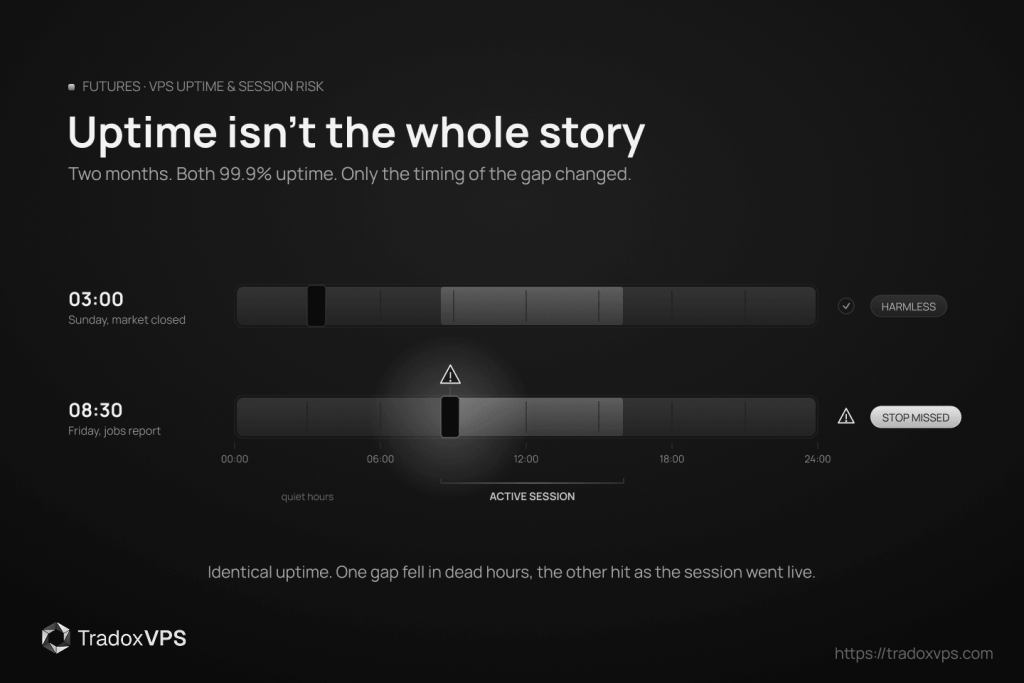
Almost every trading VPS leads with an uptime number: 99.9%, 99.99%, five nines. But that percentage answers a question futures traders aren’t really asking. This guide explains what uptime actually measures, why the timing of downtime matters far more than the amount, the “soft” failures that never show up in an uptime report, and how to evaluate a trading VPS by what actually protects your positions during the session, not the number on the sales page.
VPS for News Trading: What It Can and Can’t Do During NFP, CPI & FOMC
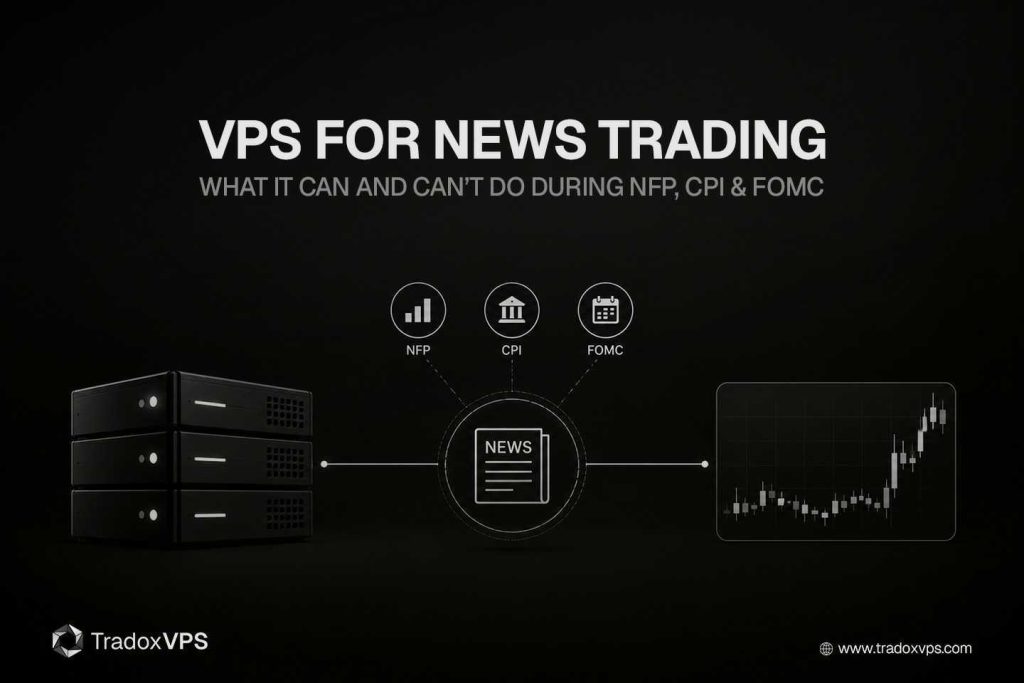
NFP at 8:30, FOMC at 2:00, the quarterly roll: the minutes that decide a month of trading. Here’s what actually happens to an automated futures setup during news events, the execution risks a VPS genuinely reduces, and the ones (slippage, liquidity gaps) it cannot.
Can a VPS Reduce Slippage in Futures Trading? The Honest Answer
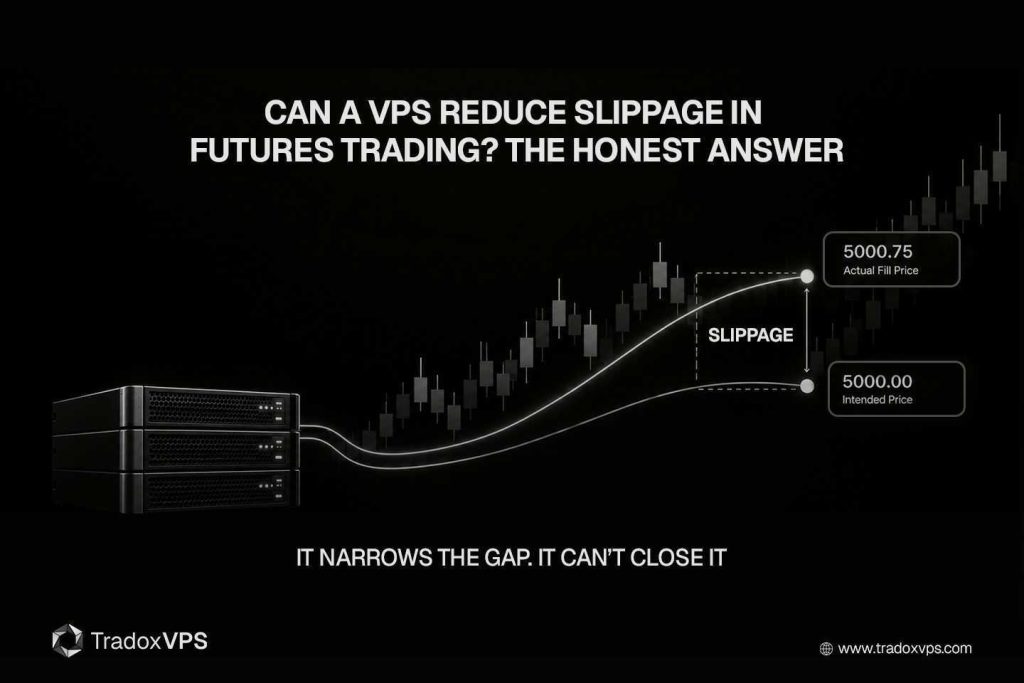
Short answer: yes, but only part of it, and probably not the part you think. A VPS reduces the slippage that comes from your own infrastructure — latency, jitter, a slow CPU, a dropped connection. But most of the slippage that eats your P&L comes from things a VPS can’t touch: volatility, liquidity, the spread, your order type, your size. Any host promising to “eliminate slippage” is lying. Here’s the real breakdown.
Chicago vs New York VPS for Trading: Which One You Actually Need (2026)
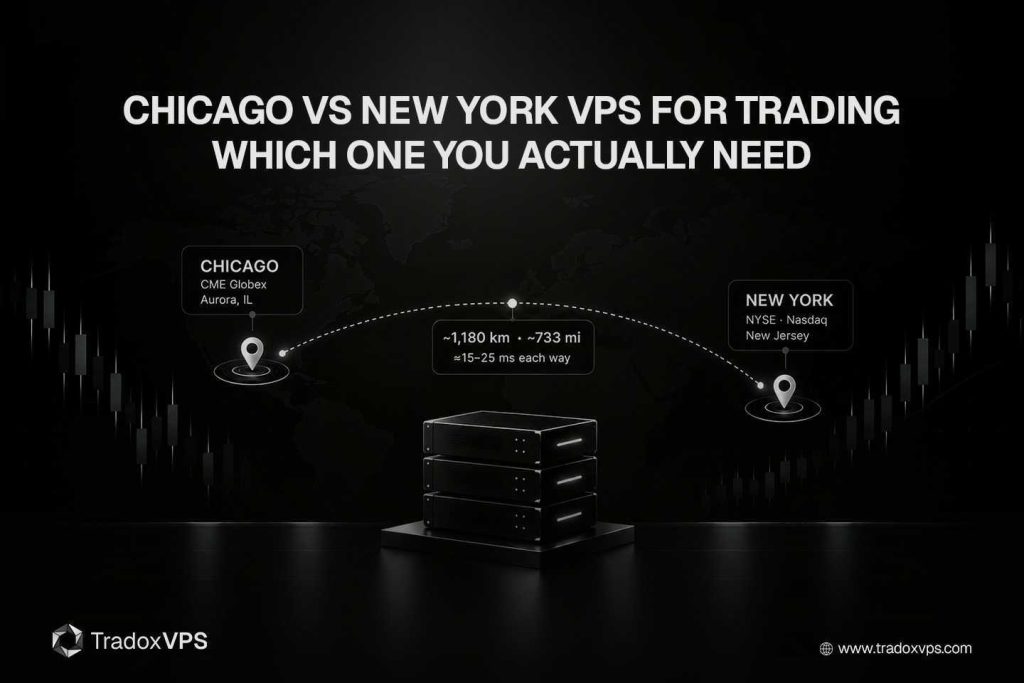
Pick the wrong city and you hand away 15–25 milliseconds on every order, before your strategy even runs. The Chicago-vs-New-York question has a clean answer, but it’s not the one most people assume: the CME’s futures engine isn’t in New York, or even downtown Chicago — it’s in Aurora, Illinois. Here’s which city wins for which market, with the latency numbers.
How Server Location Impacts Execution Speed: The Physics (2026)
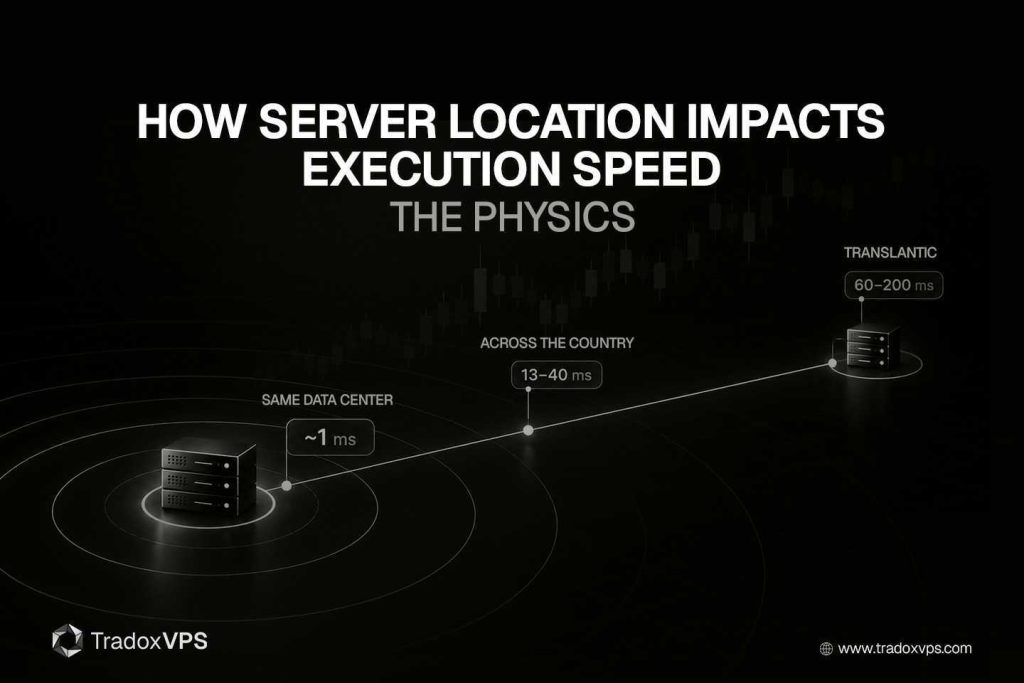
You can upgrade your CPU, tune your OS, and optimize your routing, and none of it makes light travel faster. That’s the part of execution speed most traders miss: the biggest factor is distance, because a signal in fiber covers only about 200 km per millisecond — and no software removes that. Here’s the physics of why location matters, how kilometers become milliseconds and then ticks, and where that means you should host.
Network Speed vs Latency: What Actually Matters for Trading
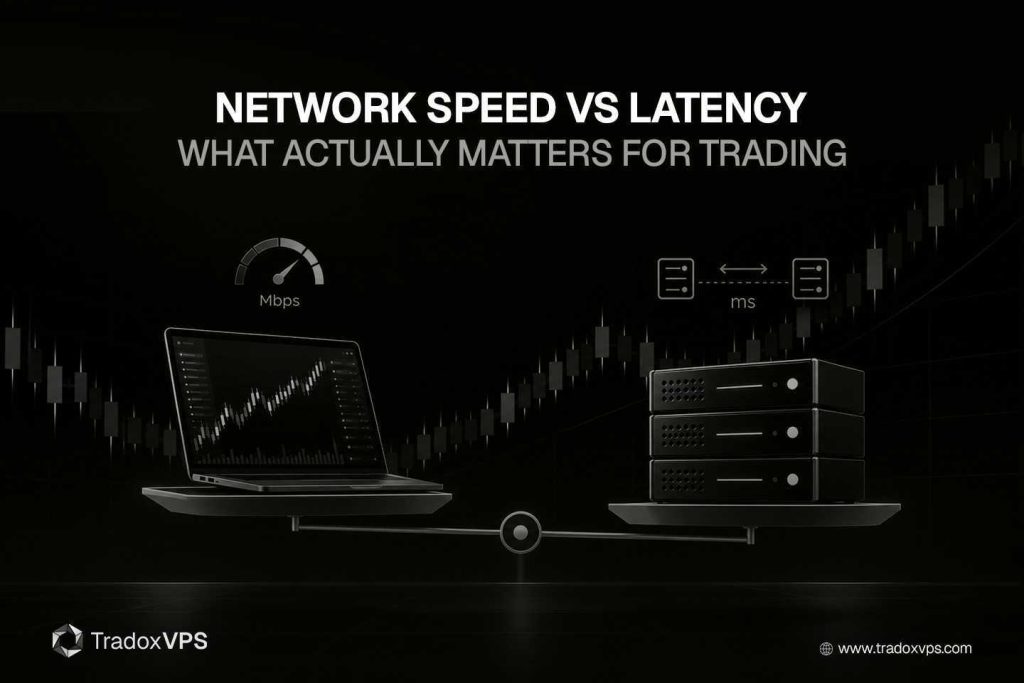
“Up to 3 Gbps” is the easiest spec to print and one of the least useful for trading. Network speed and latency aren’t even the same kind of measurement — and a trade order is small enough that your gigabits barely touch it. Here’s the actual difference, the math behind it, and the four metrics that decide your network performance as a trader.
How a Low-Latency VPS Improves Trade Execution
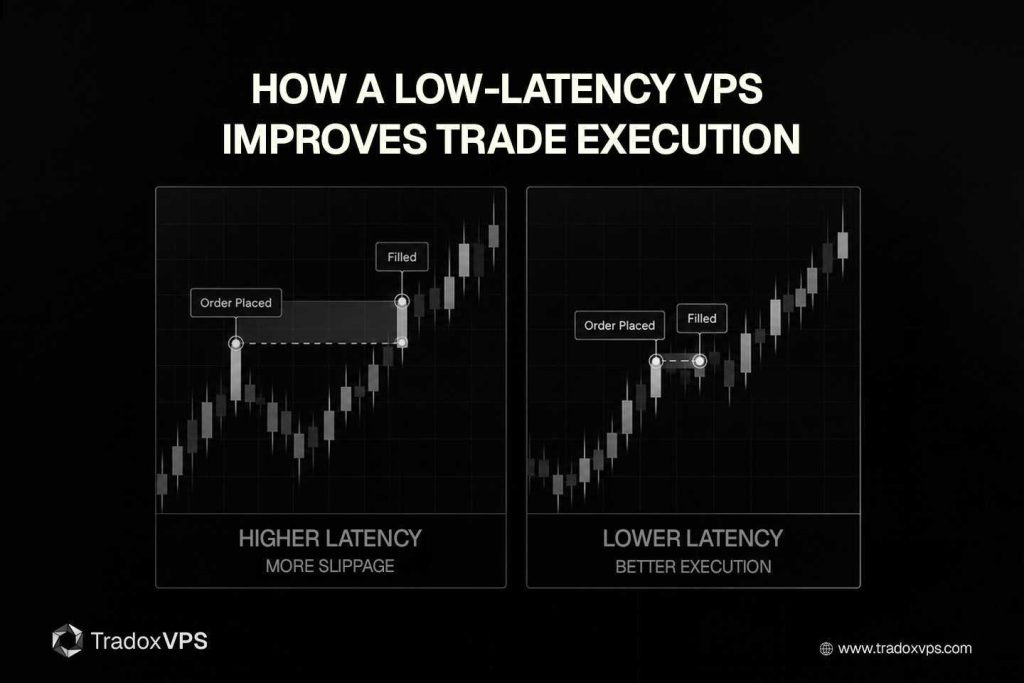
Lower latency makes your fills tighter — it doesn’t make them perfect, and anyone promising “zero slippage” is selling you something. Here’s how trade execution latency actually works: where the milliseconds come from, when they change your P&L, and the honest difference a VPS does (and doesn’t) make.
Milliseconds and Order Execution: How Much Latency Really Costs (2026)
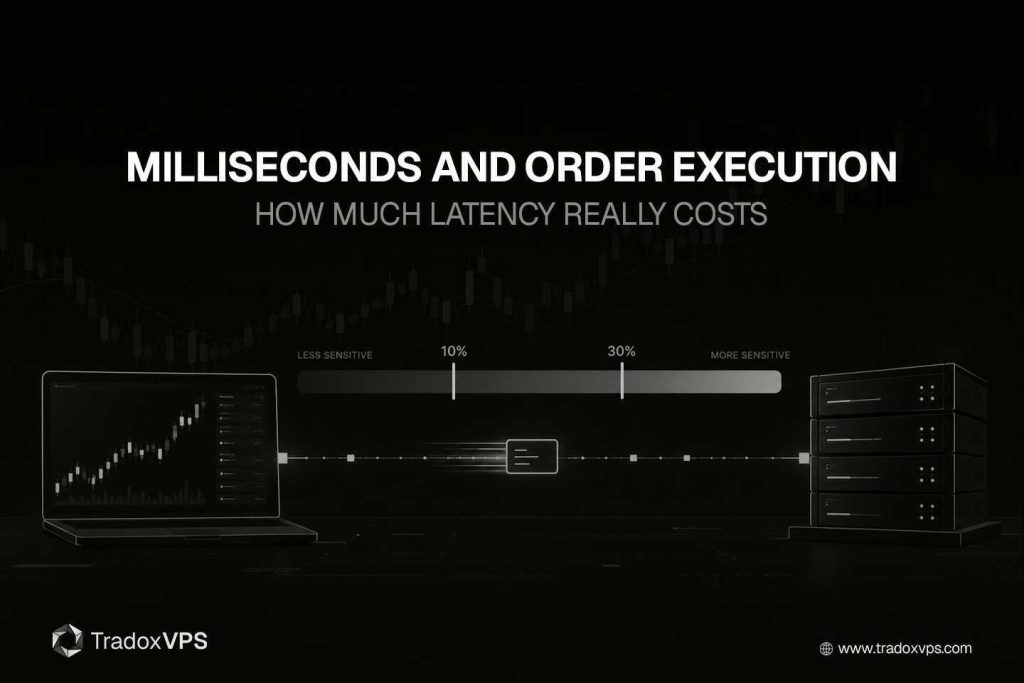
“Milliseconds matter” is one of the most repeated claims in trading-infrastructure marketing, and it’s true — but only for some traders. A millisecond is decisive if you scalp or run fast bots, and completely irrelevant if you hold positions for days. So the useful question isn’t whether milliseconds matter in the abstract; it’s how much they cost YOUR execution, and whether that’s enough to care about. Here’s the honest, quantified answer.
What Is Considered Low Latency in Futures Trading? (2026)
Ask ten providers what “low latency” means and you’ll get ten sub-millisecond numbers, all designed to end the conversation. The honest answer: low latency isn’t a single number — it’s a spectrum, and what counts depends entirely on who you are and what you trade. A high-frequency firm and a retail day trader live in latency worlds separated by a factor of a thousand and about $50,000 a month.
How to Choose a VPS Near the CME Data Center
Every trading-VPS provider says it’s “near CME.” Almost none let you verify it. This is the practical version: what “near the CME data center” actually requires, how to test a server’s real latency yourself before you pay, the buyer’s checklist that matters beyond location, and the marketing red flags to walk away from.