


The prediction market space has matured from a niche experiment into a high-stakes financial arena where volume topped $13 billion in a single month this year. After testing 15 platforms against criteria like liquidity depth and order execution speed, we identified the six that actually hold up under volatility. The differentiator between them, and what separates winners from losers, below.
This surge in activity has transformed the way we look at data. In 2026, prediction markets are no longer just for enthusiasts or crypto-natives. They have become primary source material for journalists, hedge funds, and retail traders who want a cleaner read on probability than a cable news poll or a traditional sportsbook can provide. As liquidity deepens, the spreads have tightened, making these platforms a viable alternative to traditional financial derivatives.
Why prediction markets are booming in 2026
The primary driver of the current boom is the sheer scale of the volume. According to recent market data, monthly volumes hit record highs in early 2026, crossing the $13 billion mark. This isn’t just about politics anymore. While election cycles historically drive interest, the market has expanded to include high-stakes sports contracts, macroeconomics, and even hyper-local weather events.
Regulation has also played a massive role. The shift toward CFTC regulation and federal legitimacy has brought a wave of institutional capital into the space. Exchanges that were once seen as legal gray areas are now operating as federally regulated entities, providing a level of trust that was previously missing.
Beyond the regulatory wins, the platforms themselves have outpaced traditional sportsbooks in utility. Prediction markets offer:
- Tighter spreads : peer-to-peer matching removes the heavy “vig” charged by bookmakers.
- Early exit : the ability to trade out of a position as news breaks, rather than waiting for the final result.
- Sharper pricing : markets often react faster to real-world events than any traditional data feed.
- Variety : you can trade on everything from Federal Reserve rate hikes to the next major tech IPO.
Ranking criteria: How we chose the best platforms
To find the best prediction market platforms ranked in 2026, we focused on the metrics that matter most to professional traders. It is easy to build a pretty app, but it is much harder to maintain a liquid order book during a high-volatility event. Here is how we evaluated the shortlist:
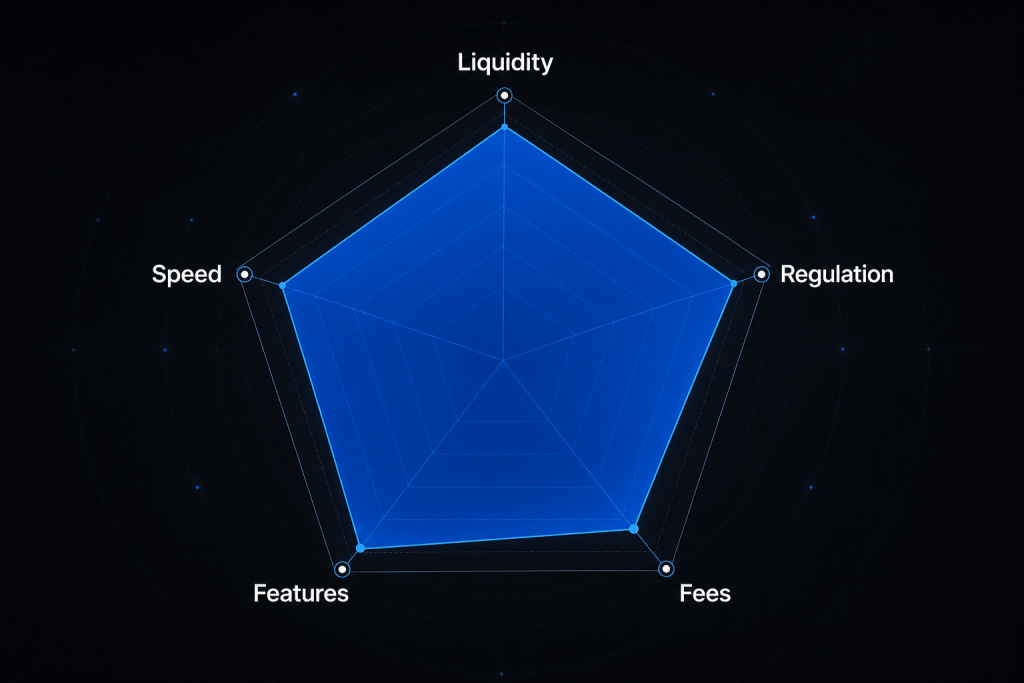
- Liquidity and Volume: We measured the depth of the order books for major contracts. High liquidity ensures you can enter and exit large positions without massive slippage.
- Regulatory Status: We distinguished between CFTC-regulated exchanges and offshore, crypto-native platforms.
- Fee Structure: We analyzed taker coefficients, settlement fees, and on-ramp costs to see who provides the best value.
- Platform Features: We looked for advanced tools like parlay builders, social leaderboards, and robust mobile UX.
- Execution Speed: We assessed how each platform handles high-frequency trading bots and API requests under load.
When comparing major options like Polymarket vs. Kalshi, the “best” choice often depends on whether you value decentralized liquidity or federal oversight.
Best prediction market platforms for 2026
Before we dive into the deep reviews, here is a quick overview of the top contenders currently dominating the market.
| Platform | Best For | Regulation | Funding | Source |
|---|---|---|---|---|
| Polymarket | Global Liquidity | Crypto-Native | USDC (Polygon) | polymarket.com |
| Kalshi | US-Regulated Trading | CFTC | ACH, PayPal, Apple Pay | kalshi.com |
| OG.com | Regulated Parlays | CFTC (DCM) | Fiat, Crypto.com | og.com |
| Robinhood | Retail Accessibility | CFTC (Partner) | Robinhood Balance | robinhood.com |
| Underdog Predict | DFS Transition | CFTC (Aristotle) | Fiat / Deposits | underdogpredict.com |
| Novig | No-Vig Sports | Sweepstakes/Licensed | Fiat / Virtual Currency | novig.co |
Top 6 prediction market platforms reviewed
1. Polymarket
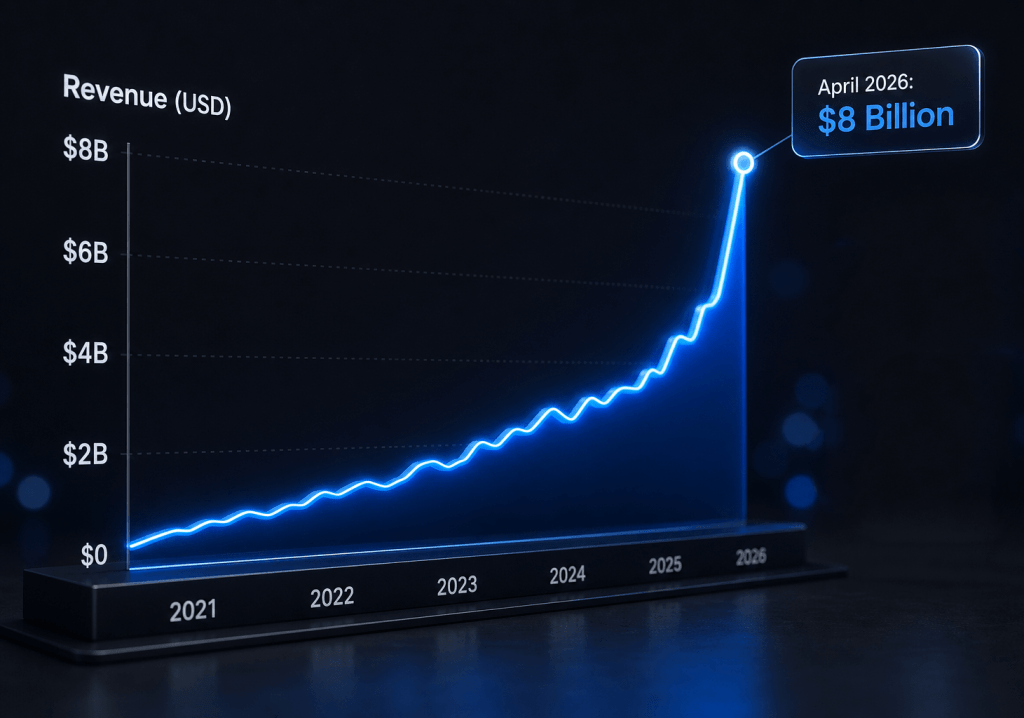
Polymarket remains the undisputed king of global liquidity. In April 2026, the platform processed over $8 billion in volume, cementing its place as the primary venue for serious event traders. It uses a hybrid-decentralized Central Limit Order Book (CLOB) on the Polygon blockchain, which allows for non-custodial trading with the speed of a traditional exchange.
For professional traders, the Polymarket SDK is the gold standard for building Polymarket trading bots. The platform even offers a daily rewards system for market makers who provide competitive liquidity to the order books.
Pros:
- Deepest liquidity: The tightest spreads on political, tech, and economic contracts.
- Market variety: Thousands of active markets ranging from OpenAI milestones to global conflicts.
- Transparency: Every trade is settled on-chain, verifiable via the Polygon blockchain.
Cons:
- Crypto funding requires familiarity with USDC and the Polygon network.
- Standard U.S. access remains restricted due to geoblocking.
Pricing:
Polymarket is unique in its fee structure, often offering maker rebates.
| Plan | Monthly Price | Annual Price | Key Limits/Inclusions |
|---|---|---|---|
| Global Platform | $0 | $0 | No trading fees; maker rewards available |
| U.S. Regulated Platform | $0 | $0 | 5% taker coefficient on executed orders |
2. Kalshi
Kalshi is the most established US-regulated exchange, operating under the direct oversight of the CFTC. This regulatory status allows it to support traditional banking options like ACH, PayPal, and Apple Pay, making it highly accessible for retail traders in the United States.
Kalshi has become a favorite for those who want a 1ms Chicago-based VPS to trade on economic data, weather, and federal court rulings. The platform utilizes a peer-to-peer exchange model, ensuring that you are trading against other participants rather than the house.
Pros:
- Nationwide access: Available legally in all 50 U.S. states for most event contracts.
- Banking options: Easy on-ramps without the need for crypto wallets.
- Regulatory safety: Federal oversight ensures market integrity and fund security.
Cons:
- Settlement fees on winning contracts can eat into profits for high-frequency traders.
- Order types are less advanced than crypto-native exchanges.
Pricing:
Traders can reduce fees by acting as “makers” in the order book.
| Plan | Price | Notes |
|---|---|---|
| Maker Orders | $0 | Typically no standard trading fees for resting limit orders |
| Taker Orders | Variable | Fees applied only to orders that match immediately |
| Settlement Fee | 3% | Applied to net winnings upon contract resolution |
3. OG.com
OG.com is a breakout platform launched in February 2026 by Crypto.com. It operates as a CFTC-regulated exchange under a Designated Contract Market (DCM) license. What makes OG stand out is its specialized focus on sports prediction, combined with a regulated parlay builder, a feature previously unavailable on regulated prediction exchanges.
Pros:
- Parlay builder: The only regulated platform allowing users to bundle multiple contracts for higher payouts.
- No winning limits: Unlike sportsbooks, OG does not limit or ban consistently profitable users.
- Polished UX: High ratings on the App Store (4.3 stars) and Google Play (4.1 stars).
Cons:
- Lower liquidity compared to giants like Polymarket.
- Pricing is spread-based, which can be less transparent than flat fees.
Pricing:
OG uses a spread-based pricing model.
| Plan | Price | Limits |
|---|---|---|
| Standard Trading | $0 (No flat fee) | Cost is embedded in the bid-ask spread |
4. Robinhood
Robinhood has democratized access to prediction markets by integrating them directly into its main app. By leveraging Kalshi’s infrastructure, Robinhood allows millions of its existing users to trade event contracts with zero commission. This is a game-changer for retail traders who already use the platform for stocks and options.
Pros:
- Frictionless entry: No new account needed for existing Robinhood users.
- Zero commissions: No user-facing trading fees on most contracts.
- Intuitive UI: Simplifies complex financial exchange concepts into a mobile-first experience.
Cons:
- Very limited market selection compared to dedicated exchanges.
- Lacks advanced order types for professional algorithmic strategies.
5. Underdog Predict
Underdog Predict has successfully bridged the gap between Daily Fantasy Sports (DFS) and prediction markets. By launching its own CFTC-regulated exchange, Aristotle, Underdog has moved from a pick’em site to a legitimate financial marketplace. It is the premier choice for sports fans who prefer a simplified “Yes/No” mechanic over complex order books.
Pros:
- Simplified experience: Best-in-class UI for those transitioning from fantasy sports.
- Regulated: Fully compliant with U.S. federal laws.
- Wide availability: Operates in over 30 states and DC.
Cons:
- Strictly sports-focused; you won’t find political or economic markets here.
6. Novig
Novig is a peer-to-peer sports prediction market that operates on a “no-vig” model. By allowing users to set their own odds or trade against others, it eliminates the house edge that typically makes sports betting a losing game for most. It uses a sweepstakes model in many states to remain compliant while offering real cash prizes.
Pros:
- Transparent order book: Provides access to live liquidity and multiple levels of depth.
- High profitability: Novig claims 43% of their users are profitable, compared to just 3% on traditional sportsbooks.
- No limits: Sharp bettors are welcome and won’t be limited for winning.
Cons:
- Limited to mainstream U.S. sports.
- Sweepstakes model (Novig Cash) can be confusing for new users.
Essential infrastructure for prediction market traders
While picking the right platform is critical, professional traders in 2026 have realized that the exchange is only half of the equation. If you are running automated bots or market-making strategies, you cannot afford to trade from a standard home connection or a generic cloud server.
TradoxVPS: The professional’s edge
TradoxVPS has become the essential infrastructure layer for the prediction market industry. Our infrastructure is built on Ryzen 9950X Zen 5 CPUs with clock speeds up to 5.7GHz. For prediction market traders, this means your bot processes ticker data and executes orders with a measurable edge.
We provide a specialized Dublin-based infrastructure that delivers 0.5ms latency to Polymarket endpoints, which is a competitive necessity for high-frequency strategies.
Key benefits of TradoxVPS infrastructure:
- Ultra-low latency: Essential for front-running arbitrage opportunities across multiple exchanges.
- High performance: No CPU-throttling during high-volatility events like FOMC or election nights.
- Global hubs: Optimized locations in Chicago and Dublin for proximity to CME and Polymarket.
Pricing:
Our pricing is designed to provide premium hardware without the premium markup.
| Plan | Monthly Price | Annual Price | Key Specs |
|---|---|---|---|
| Starter Trader VPS | $39 | $421 | 2 Cores Ryzen 9950X, 6GB RAM, 75GB NVMe |
| Active Trader VPS | $69 | $745 | 4 Cores Ryzen 9950X, 12GB RAM, 150GB NVMe |
| Advanced Trader VPS | $99 | $1069 | 6 Cores Ryzen 9950X, 18GB RAM, 250GB NVMe |
| Ultra Low Latency VPS | $179 | $1933 | 12 Cores Ryzen 9950X, 36GB RAM, 500GB NVMe |
Critical trading infrastructure: Why latency matters in prediction markets
In the 2026 market, prediction trading has become as fast-paced as any equity exchange. When a piece of news breaks, the price of a contract on Polymarket or Kalshi can move 50% in a matter of seconds. This is where latency becomes a critical factor.
If your trading bot is running on a standard home connection, you are dealing with “jitter,” the variance in latency that causes your orders to arrive at different times. This can result in your order being “sniped” by a competitor whose infrastructure is closer to the exchange.
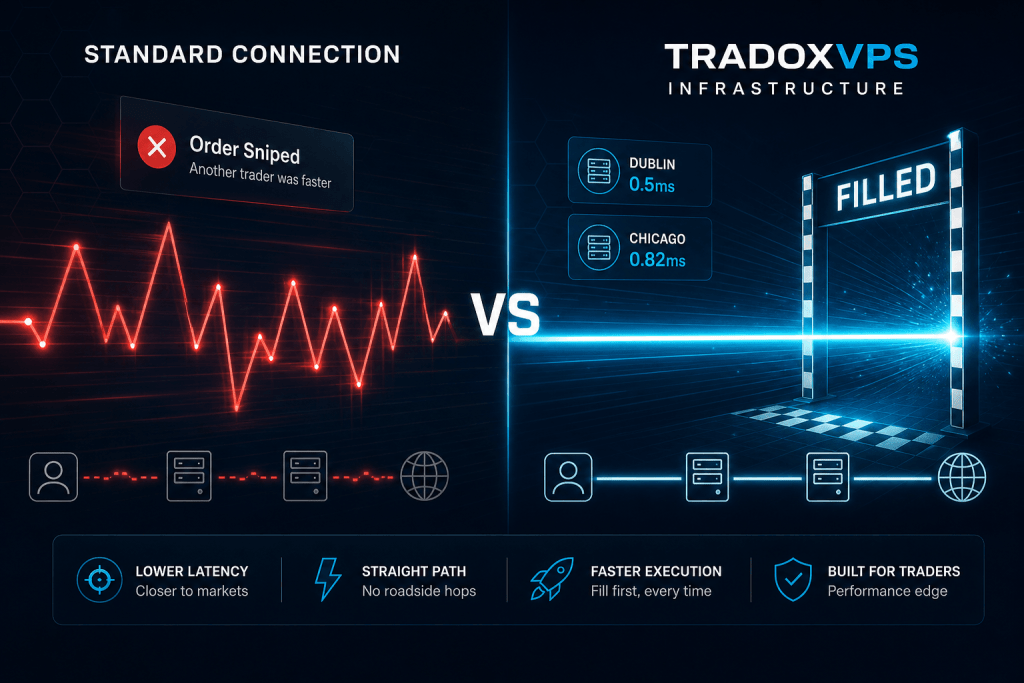
At TradoxVPS, we solve this by placing your trading infrastructure proximal to the major hubs.
- Dublin Hub: We provide a 0.5ms path to Polymarket, ensuring your bot sees price changes and executes orders before the rest of the market.
- Chicago Hub: We offer a verifiable 0.82ms latency to CME-linked endpoints, which is essential for traders who arbitrage between futures and prediction markets.
Running these bots also requires significant compute power. That is why we use the AMD Ryzen 9950X. Its 5.7GHz clock speed ensures that even the most complex strategies can process tick data without hitting a CPU bottleneck. You can learn more about how to set up a Polymarket bot on a VPS to ensure your strategy runs 24/7 with zero downtime.
Start trading on prediction markets with the TradoxVPS edge
The prediction market industry has arrived, and the professionalization of the space means that your tools are just as important as your insights. Whether you are scalping sports contracts on OG.com or running a complex market-making bot on Polymarket, the speed of your execution determines your profitability.
TradoxVPS provides the specialized infrastructure you need to compete at the highest level. We offer:
- Instant deployment: Have your trading VPS up and running in less than 5 minutes.
- Unrivaled speed: Ryzen 9950X hardware and sub-millisecond network routing.
- Reliability: A 99.999% uptime guarantee to keep your bots in the market 24/7.
Don’t let slippage and lag eat your edge. Join the community of serious traders who rely on our infrastructure to win. View our pricing plans and deploy your trading edge today.
Frequently Asked Questions
For users in the United States, Kalshi and OG.com are the top choices due to their CFTC regulation. Robinhood also provides a very accessible entry point for those already using the app for stocks.
Polymarket is the global leader in liquidity, often processing billions of dollars in volume per month. This depth makes it the best choice for large-scale professional traders.
Yes, for many traders. Prediction markets typically offer tighter spreads and the ability to exit positions early, whereas sportsbooks charge a higher ‘vig’ and often limit successful bettors.
If you are running an automated trading bot, a VPS is essential. It provides the low latency and 24/7 uptime needed to execute strategies before the market moves against you.
Fees vary widely. Polymarket uses a taker coefficient (often 5%), while Kalshi charges a 3% settlement fee on winners. Robinhood offers zero-commission trading on most contracts.
Absolutely. Platforms like OG.com, Underdog Predict, and Novig are specifically designed for sports traders, offering everything from moneyline equivalents to player prop parlays.
In the U.S., it is legal to use CFTC-regulated platforms like Kalshi and OG.com. Polymarket is legal for global users, though U.S. access is restricted.